
Table of Contents
Why RSS Still Deserves Attention In 2026
RSS is not the loudest topic in SEO, but it has never fully disappeared. While search results now include AI summaries, video packs, social posts, product grids, forum threads, and personalized feeds, publishers still need one simple thing: a reliable way to tell platforms when fresh content is available.
An RSS feed does that job well. It gives readers, apps, crawlers, automation tools, newsletter systems, and content platforms a clean list of your latest posts. It does not replace strong content, internal links, structured data, or XML sitemaps, but it can support discovery and distribution.
In 2026, SEO is less about one ranking trick and more about building a dependable publishing system. Search engines need crawlable pages. Users need useful content. Content platforms need machine-readable updates. RSS fits into that system because it packages new content in a simple, predictable format.
The important point is balance. An RSS feed will not magically rank weak pages. It will not fix thin content, bad architecture, poor page experience, or missing authority. But for blogs, news sites, ecommerce editorial hubs, podcasts, SaaS resources, and niche publishers, it can make content easier to find and reuse.
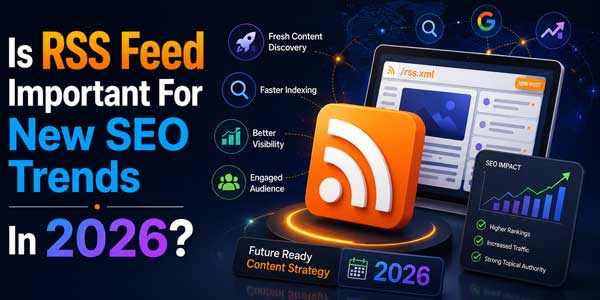
So, is RSS feed important for SEO in 2026? Yes, but not in the old “submit a feed and rank higher” sense. RSS matters as a technical SEO support asset, a content syndication channel, a freshness signal, and a bridge between your website and modern discovery environments.
What An RSS Feed Actually Does For SEO
RSS stands for Really Simple Syndication. It is a structured feed that lists recent content from a website. A typical feed includes post titles, URLs, publication dates, summaries, categories, authors, and sometimes media. Feed readers and other systems can check it automatically for new updates.
For SEO, the feed’s main value is content discovery. It helps systems notice when a new page exists. Google has long supported RSS and Atom feeds as ways to discover recent URLs, and Google’s own sitemap guidance says CMS-generated RSS or Atom feeds can be submitted as sitemap URLs, although they usually include only recent content.
That distinction matters. An XML sitemap is usually built to list important URLs across a site. An RSS or Atom feed is usually built to list fresh or recently updated content. Both can help crawlers, but they serve different roles. A strong SEO setup often uses both, not one instead of the other.
RSS can also support distribution beyond search. Newsletter tools can pull blog posts from a feed. Social automation tools can publish updates from it. Podcast apps rely heavily on feeds. Feed readers help loyal users follow your site without depending on social algorithms or search rankings.
In a world where platforms increasingly control visibility, owning a clean feed is useful. It gives your website a portable content layer. Readers and tools can subscribe to your updates directly, and your publishing workflow becomes less dependent on one search engine or social media platform.
How RSS Fits Into New SEO Trends In 2026
The biggest SEO shift in 2026 is not one single update. It is the move toward multi-surface discovery. Content may appear in traditional search, Discover-style feeds, AI-assisted answers, newsletters, browser recommendations, social search, shopping surfaces, and content aggregators. Clean distribution matters more than ever.
An RSS feed helps because it provides a structured update stream. When your site publishes often, platforms and tools need a dependable way to know what changed. RSS gives them a lightweight list of recent URLs, titles, dates, and summaries without forcing them to crawl every page from scratch.
Freshness is another trend. Search engines and users expect updated content in fast-moving topics such as technology, finance, health, travel, cybersecurity, ecommerce, and software. RSS helps highlight new or updated content quickly, especially when paired with XML sitemaps and clean internal linking.
AI search also changes the content landscape. Large language systems, answer engines, and research tools rely on structured, accessible, and consistently updated sources. RSS is not a guarantee that AI systems will use your content, but it makes your updates easier for compliant tools and aggregators to detect.
Publisher loyalty is also returning. As search results become more crowded, users increasingly follow trusted brands directly through newsletters, apps, feeds, and preferred-source features. RSS supports that direct relationship by giving readers another way to receive your content without waiting for an algorithmic recommendation.
RSS Is Not A Ranking Shortcut
One mistake is treating RSS as a direct ranking factor. It is better to view it as a discovery and distribution layer. It can help new pages get found, but rankings still depend on content quality, relevance, technical accessibility, authority, internal linking, structured data, user satisfaction, and search intent match.
If your site publishes low-value content, an RSS feed simply distributes low-value content faster. If your site publishes useful, original, well-structured content, a clean feed can help that content move through the web more efficiently. The feed supports the strategy; it does not replace the strategy.
RSS Feed Versus XML Sitemap: Which One Matters More?
Many site owners confuse RSS feeds with XML sitemaps. They are related, but they are not the same. An XML sitemap is usually a broad map of important URLs. It tells search engines which pages should be discovered and includes information such as last modification date when implemented properly.
An RSS feed is usually a rolling list of recent posts or updates. It is smaller, more current, and focused on new content. That is why RSS can be useful for sites that publish often. Search systems can check the feed to discover recent changes without downloading a massive sitemap every time.
For a small static business website with ten service pages, an RSS feed may not matter much. A clean sitemap, good navigation, and strong internal links may be enough. For a blog, magazine, news site, podcast, or ecommerce content hub, RSS becomes more useful because new URLs are published frequently.
The best answer is not “RSS or sitemap.” It is RSS plus XML sitemap. Use the sitemap for your full important URL inventory. Use RSS or Atom for fresh updates. Together, they help crawlers understand both the structure of your site and the pace of your publishing.
- XML Sitemap: Best for listing important URLs across the whole website.
- RSS Feed: Best for recent posts, updates, episodes, or newly published content.
- Internal Links: Best for showing hierarchy, context, importance, and user pathways.
- Structured Data: Best for clarifying content type, authorship, products, FAQs, videos, and articles.
If you only submit a feed and ignore the sitemap, old evergreen pages may be missed. If you only maintain a sitemap and ignore the feed, new posts may still be found, but you lose a simple freshness channel. A complete technical SEO setup uses the right file for the right job.
How RSS Supports Faster Content Discovery
Fast discovery matters when content is time-sensitive. News, tutorials, product updates, release notes, security alerts, market analysis, job posts, podcast episodes, and seasonal content can lose value if crawlers find them late. RSS helps because it creates an obvious stream of fresh URLs.
Google’s guidance has historically explained that XML sitemaps and RSS or Atom feeds can complement each other. XML sitemaps can describe a broader set of pages, while feeds can provide recent changes. That makes RSS especially useful for websites where freshness is part of the value proposition.
Discovery is not the same as indexing. A crawler may discover your URL through RSS, but the page still needs to be crawlable, indexable, unique, useful, and aligned with search quality expectations. A broken page, duplicate post, soft 404, or blocked URL will not become valuable just because it appears in a feed.
Still, discovery is the first step. If a search engine or content platform does not know a page exists, it cannot evaluate it. RSS reduces friction by placing fresh URLs in a machine-readable file. This is especially helpful when new content is buried deep in archives or has weak internal links at launch.
For websites that publish daily or weekly, RSS can also help monitoring tools. Your team can use the feed to verify whether new posts are live, whether titles are correct, whether URLs are clean, and whether publication dates are appearing as expected. That turns RSS into a quality-control asset too.
RSS And Google Discover, Follow Features, And Publisher Visibility
Google Discover is not the same as regular search. It surfaces content based on user interests rather than typed queries. Google’s Discover documentation explains that Discover content comes from indexed pages, and eligibility depends on helpful, reliable, people-first content that follows Google Search policies.
RSS can play a role in follow-style experiences because a feed gives platforms a way to know when a site has new posts. Google has also documented that sites can help users follow publications in certain contexts by making feeds discoverable and using clear feed titles. This matters for publishers trying to build loyal audiences.
That does not mean RSS guarantees Discover traffic. Discover is highly personalized, unpredictable, and quality-sensitive. Strong images, clear headlines, topical authority, trust, freshness, and user interest all matter. RSS only supports the update pipeline; it does not control whether a story is recommended.
For publishers, the strategic lesson is simple: make your content easy to access in multiple formats. A clean article page helps search. A clean sitemap helps crawling. A clean feed helps followers and aggregators. Strong branding helps users recognize you when your content appears in personalized surfaces.
In 2026, the relationship between search and subscriptions is becoming more important. If users follow your site through a feed reader, browser feature, newsletter, or app, you are less dependent on ranking volatility. RSS can quietly support that audience ownership strategy.
Technical RSS Best Practices For 2026 SEO
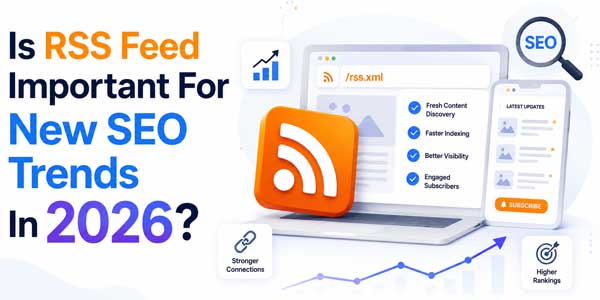
A useful RSS feed should be clean, valid, fast, and easy to discover. Place it at a predictable URL such as /feed/, /rss.xml, or a CMS default feed location. Make sure it returns a proper XML content type, loads quickly, and does not require cookies, login, or JavaScript.
Include the essentials: title, canonical URL, publication date, updated date when available, author, category, and a short summary or full content depending on your strategy. For podcasts, include the required podcast-specific tags. For news or blogs, make the feed easy for readers and tools to parse.
Use absolute URLs, not relative links. Avoid tracking parameters in feed URLs unless you have a clear reporting reason. If you use UTM tags for newsletter automation, make sure canonical tags on the article pages still point to the clean URL. Do not let feed tracking create duplicate URL confusion.
Validate the feed after major CMS, plugin, theme, or deployment changes. XML errors can break feed readers and automation tools. Common problems include invalid characters, broken dates, unescaped ampersands, missing closing tags, duplicate items, wrong time zones, and malformed media elements.
- Keep It Valid: Test the feed whenever templates, plugins, or publishing workflows change.
- Keep It Fresh: Include recent posts and update the feed immediately after publishing.
- Keep URLs Clean: Use canonical, absolute, indexable article URLs in every feed item.
- Keep It Discoverable: Link the feed in your site header metadata and footer where useful.
- Keep It Secure: Serve the feed over HTTPS and avoid mixed-content media links.
Also include feed autodiscovery in your site’s HTML when your platform supports it. This helps browsers, feed readers, and tools detect the feed without manual searching. For most CMS websites, this is easy to implement and should be part of a standard technical SEO checklist.
Common RSS Feed Mistakes That Can Hurt SEO Workflows
The biggest RSS mistake is publishing a broken feed and never checking it. A feed that returns errors, redirects poorly, or lists wrong URLs can confuse tools and frustrate subscribers. It may not directly penalize your rankings, but it weakens your publishing system and can slow down discovery.
Another mistake is including non-canonical URLs. If the feed lists parameter-heavy URLs, staging URLs, HTTP versions, duplicate category paths, or redirected links, you are sending messy signals. The feed should point to the same clean URLs you want users and search engines to visit.
Some websites accidentally expose private or low-quality content through feeds. Drafts, test posts, internal notes, thin auto-generated pages, and noindex content should not appear in a public SEO feed. Review your CMS settings carefully, especially after plugin changes or custom development.
Thin summaries can also limit usefulness. A feed does not need to contain the entire article, but titles and summaries should be clear enough for readers and tools to understand the content. Generic titles like “Update” or “New Post” are weak for both humans and automated systems.
Finally, do not use RSS as a spam syndication machine. Automatically blasting every post to dozens of low-quality sites can create duplicate content, brand dilution, and poor user experience. Syndication should be selective, controlled, and connected to your real audience strategy.
RSS And Duplicate Content Concerns
Many publishers worry that full-content RSS feeds will cause duplicate content. The bigger issue is not the feed itself. The risk comes when other sites scrape your feed and republish your content without proper canonical references, attribution, or added value.
You can reduce risk by using summaries, adding internal links, monitoring scraped copies, and making sure your original pages are indexed quickly. For high-value publishers, full feeds may serve loyal readers better. For sites often targeted by scrapers, summary feeds may be safer.
Who Needs RSS Most In 2026?
RSS is most valuable for websites that publish regularly. Newsrooms, blogs, magazines, podcasts, software companies, ecommerce content hubs, educational sites, job boards, deal sites, documentation portals, and niche communities can all benefit from a clean feed.
For a local service business that updates content once every few months, RSS is less critical. It is still fine to have, especially if the CMS generates it automatically, but it should not be the main SEO focus. That business will usually benefit more from local SEO, reviews, service pages, citations, and conversion improvements.
For publishers and content-led brands, RSS can support multiple workflows. It can feed email newsletters, push notifications, social posting, content aggregators, internal dashboards, partner syndication, and monitoring systems. That makes it useful even when the direct SEO impact is hard to isolate.
RSS is also helpful for developers and technical teams. A feed can be used to test whether new content is publishing correctly, whether dates are accurate, whether canonical URLs are clean, and whether media fields are available for downstream systems.
- High Priority: News sites, blogs, podcasts, magazines, documentation hubs, and frequent publishers.
- Medium Priority: Ecommerce stores with buying guides, product updates, or editorial content.
- Low Priority: Small static websites with rare updates and no content distribution workflow.
If your site depends on fresh content for traffic, RSS should be part of your technical SEO foundation. If your site is mostly static, keep RSS clean if it exists, but spend more effort on content quality, internal links, schema, Core Web Vitals, and conversion paths.
How To Add RSS To A Modern SEO Strategy
Start by checking whether your CMS already generates a feed. WordPress, Blogger, Shopify blogs, many headless CMS platforms, and podcast systems often provide feeds by default. Open the feed URL, validate it, and confirm it lists the right content with clean URLs.
Next, submit the feed in Google Search Console if it is appropriate for your site. Treat it as a supporting sitemap, not your only sitemap. Keep your main XML sitemap submitted too. For large websites, separate feeds by content type may also help organization.
Then connect RSS to your distribution workflow. Use it to power newsletters, alerts, social previews, internal content dashboards, or partner updates. Every time you publish a new post, the feed should make that post available to systems that help your audience discover it.
Measure results carefully. RSS traffic may appear as referral, direct, email, or campaign traffic depending on how users access it. Use clean UTM tagging only where appropriate, and keep canonical URLs clean. The goal is better distribution, not messy attribution.
Review the feed monthly. Check whether it updates after publishing, whether old items roll off correctly, whether images work, whether titles are readable, and whether feed readers can parse it. A five-minute check can prevent weeks of silent distribution problems.
Final Thoughts: RSS Is Quiet, But Still Useful
RSS is not the star of SEO in 2026, but it is still a useful supporting player. It helps search systems, readers, apps, and automation tools notice new content faster. It strengthens your publishing infrastructure and gives your audience another way to follow your site directly.
The best way to think about RSS is simple: it is not a ranking hack; it is a distribution layer. When your content is helpful, your technical SEO is clean, and your site publishes consistently, RSS helps that work travel farther with less friction.
If you run a content-heavy website, keep your RSS feed active, valid, discoverable, and connected to your sitemap strategy. If you run a small static site, do not overthink it, but do not break it either. A clean feed is easy to maintain and can still support future growth.
SEO in 2026 rewards clarity, freshness, trust, and accessibility. RSS supports all four when used properly. It gives your site a simple voice that machines and loyal readers can understand: here is what we published, here is when it changed, and here is where to read it.
Frequently Asked Questions
Is RSS Feed Important For SEO In 2026?
Yes, an RSS feed is still important for SEO in 2026 as a discovery and distribution tool. It does not directly guarantee rankings, but it helps search engines, feed readers, newsletters, and other platforms find fresh content faster and more reliably.
Does Google Still Use RSS Feeds?
Google has supported RSS and Atom feeds for discovering recent URLs, and Google’s sitemap guidance allows RSS or Atom feed URLs to be submitted as sitemaps. However, discovery does not guarantee indexing or ranking, so content quality and technical SEO still matter.
Is An RSS Feed Better Than An XML Sitemap?
No. RSS feeds and XML sitemaps serve different purposes. An XML sitemap lists important site URLs, while an RSS feed usually lists recent posts or updates. For strong technical SEO, content-heavy websites should use both together.
Can RSS Help Google Discover Traffic?
RSS can support follow-style experiences and fresh content discovery, but it does not guarantee Google Discover traffic. Discover visibility depends on indexed content, user interest, content quality, strong headlines, helpful images, trust, and compliance with Google Search policies.
What Should I Include In An SEO-Friendly RSS Feed?
An SEO-friendly RSS feed should include clean canonical URLs, titles, publication dates, updated dates when available, authors, summaries, categories, and valid XML. It should load over HTTPS, update quickly after publishing, and avoid duplicate or non-indexable URLs.













Be the first to write a comment.