
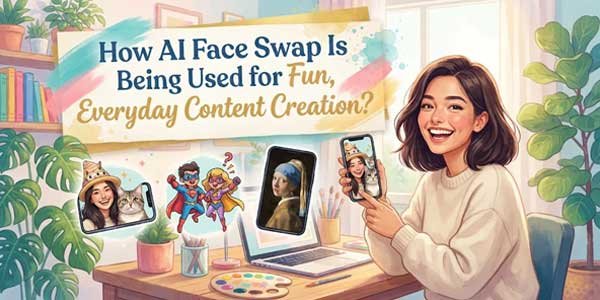
Face swap used to belong to film studios. It needed actors, cameras, editing suites, and weeks of post-production. Today, the same idea runs in a browser tab. A person uploads a photo or a short video, adds a reference portrait, and gets a swapped result in minutes. No studio, no crew, and no editing skills are required.
That change is why face swap has become an everyday creative tool rather than a special effect. People use it for jokes with friends, birthday videos, social posts, and small creative projects. The technology is the same family of tools that powers AI image and video generation, but the use case is simpler: take a face from one image and place it into another, while keeping the lighting, expression, and scene intact.
Table of Contents
Why Face Swap Moved From Studios To Phones?
The first reason is access. Browser-based tools removed the install step. There is nothing to download and no timeline to learn. A user opens a page, uploads two images, and sees a result. That low barrier is the same shift described in earlier coverage of AI photoshoot generators, which showed how AI tools compress a slow production workflow into a few steps: How AI Photoshoot Generators Streamline Ecommerce Content And Social Campaigns?
The second reason is cost. A traditional shoot or edit costs time and money for every variation. A browser tool lets a person test ten ideas and keep one. The cost of trying is close to zero, so people experiment more freely.
The third reason is speed. Social content moves fast. A joke that takes a week to produce is already stale. A face swap that takes minutes can still catch the moment. That is why the strongest use cases are short-lived: a reaction video, a meme, a greeting, a profile picture for a party.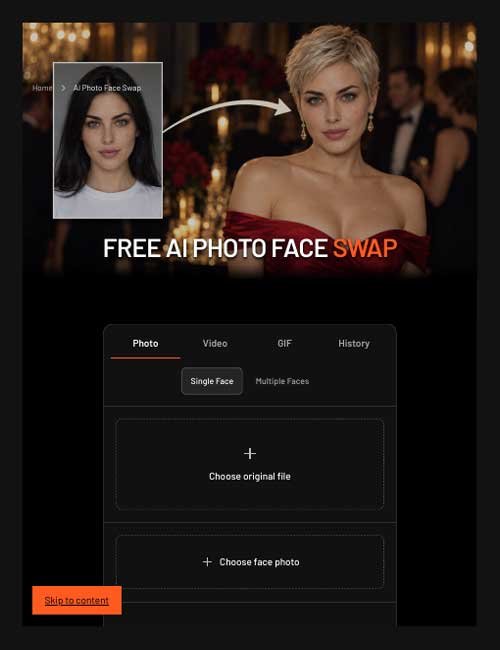
Photo Face Swap: The Easiest Starting Point
Photo face swap is where most people start. The input is simple: one photo that sets the scene and one portrait that supplies the face. The tool detects the face, aligns it to the angle and lighting of the target photo, and blends it in.
People use it to put themselves into a movie poster, to swap faces with a friend in a group photo, or to test how a character design looks on a real person. Because a photo is a single frame, the result is easy to check. If the lighting looks wrong or the angle does not match, the user can try a different source portrait and run it again.
Free open-source AI APIs for images and videos have made this kind of experimentation cheaper for developers too, and that wider availability is part of why so many browser tools now exist: Best Free Open Source AI APIs For Images And Videos In 2026
One practical tip: use a clear, front-facing portrait as the source. A blurry photo, a face in shadow, or a strong side angle makes the match harder and the result less convincing. Good input matters more than any setting.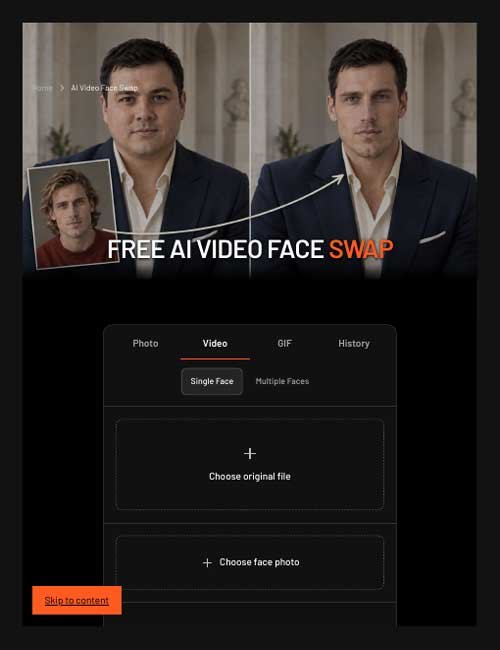
Video Face Swap: Harder, But More Fun To Watch
Video face swap is the same idea applied frame by frame. That is why it is harder. The face moves, the lighting changes, and the expression shifts. The tool has to track the face across frames and keep it stable, or the result flickers.
When it works, video is also the most rewarding format. A short clip of a friend delivering a famous movie line, a birthday message in a character costume, or a group video where everyone swaps faces at once all land better in motion than in a still image.
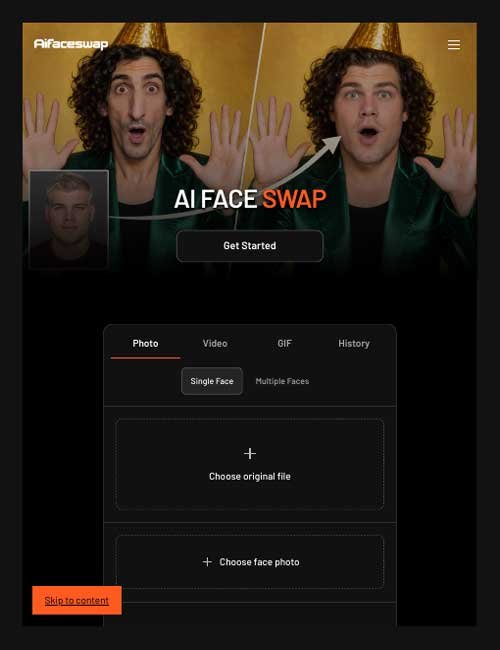
Aifaceswap is one browser-based example in this category: it handles photos, videos, and GIFs, supports up to four faces in one file, and gives a small free daily allowance with no sign-up. It is useful as a worked example because it shows the full range in one place, from a single photo to a short video clip. But it is only one of several tools in this space, and the workflow is similar across them: upload, pick a face, generate, download.
The practical limit is length. Short clips work best. A five-second greeting or a ten-second joke is easier to keep clean than a full minute of continuous movement, and it is also easier to share.
GIFs, Memes, And Group Photos:
GIFs sit between photos and video. They are short, looping, and built for sharing. A face-swapped GIF works well as a reaction image or a birthday reply because it carries motion without the weight of a video file.
Group photos are another popular case. Swapping several faces at once turns a normal group shot into a joke that everyone in the photo shares. Tools that support multi-face swap handle each face separately, so each person can be mapped to a different reference portrait. The result only works if every face is clear in the source photo, so a well-lit group shot matters.
This is also where AI features on social media overlap with face swap. Social platforms already use AI for captions, tagging, and trend prediction, and face swap fits the same pattern of quick, shareable, AI-assisted content: 7 Hidden AI Features You Should Be Using On Social Media
What Good Results Have In Common?
Good face swap results share three traits. First, the source and target photos match in lighting and angle. A bright outdoor portrait does not blend well into a dark indoor scene. Second, the faces are similar in size and framing. A close-up portrait mapped onto a distant figure looks wrong. Third, the user checks the result before sharing. Small errors in teeth, hair edges, or skin tone are easy to miss at thumbnail size and obvious at full size.
There is also a creative point that applies beyond face swap. AI tools are strong at fast, repetitive production work, but the final judgment still belongs to the person using them. Designers who blend AI speed with human review get better results than those who accept the first output without checking, a point made in coverage of AI in graphic design: AI Vs Human Creativity: Graphic Design Agency In Ahmedabad Weighs In
Using Face Swap Responsibly:
Face swap is fun, but it uses a real person’s face. That creates a clear rule: only swap faces with consent. Swapping your own face, or a friend’s face with their permission, is the normal use. Using someone else’s face without asking, or making a person appear to say or do something they did not, is not.
Consent is the line that separates a joke from a problem. Before sharing a swapped photo or video, ask whether every person in it would be comfortable seeing it. If the answer is not yes, do not post it. Most tools in this category state the same rule in their terms, and responsible use is what keeps the category usable for everyone.
Final Take:
AI face swap has moved from a studio effect to an everyday creative tool because it became fast, cheap, and easy to try. Photos are the simplest entry point, short videos are the most entertaining format, and GIFs and group photos are the most shareable. The technology will keep improving, but the pattern is already clear: people use it to make ordinary content more personal and more fun.
The best way to start is small. Pick one clear photo, one good portrait, and one simple idea. See how the result looks, adjust the input, and try again. The tools that help creators work faster, from AI website builders to blog automation, all reward the same habit of testing quickly and keeping what works: Top AI Tools To Develop A Website With Best Prompts Examples
 About the Author:
Shota Amagasa writes about AI creative tools, everyday content creation, and practical digital workflows. Recent work focuses on how small teams and everyday users apply AI image and video tools to photos, videos, and social content. He works with Aifaceswap.













Be the first to write a comment.