
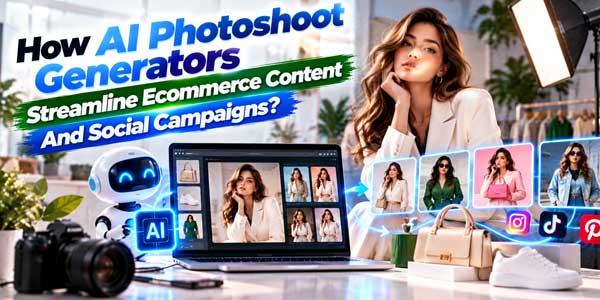
Every modern ecommerce team understands the same pressure: publish more product visuals, create cleaner campaign images, test more creative angles, and do it all without stretching production budgets. Traditional photoshoots still matter, but they are expensive, slow to schedule, and hard to repeat every time a brand wants one more background, one more lighting style, or one more social-media crop. That is why AI photoshoot generators have become useful for growth teams, solo founders, and content marketers who need speed without sacrificing presentation quality.
One example is 1008.ai’s AI Photoshoot Generator, a tool built to turn a prompt or uploaded image into polished product, portrait, and ecommerce visuals. Instead of rebuilding an entire shoot from scratch, a user can upload a product or subject, describe the backdrop, lighting, camera direction, and mood, then generate multiple photoshoot-style outputs. That workflow matters because it helps teams move from idea to publishable asset much faster than a fully manual pipeline.
Table of Contents
Why The Old Workflow Slows Teams Down?
A conventional product or lifestyle shoot usually involves location planning, talent coordination, lighting setup, photographer time, retouching, and multiple feedback cycles. Even when the result is strong, the process is not always flexible. If the team later needs a cleaner background for a marketplace listing, a warmer lifestyle angle for paid social, or a tighter vertical crop for a mobile campaign, the original assets may not be enough. That can force a second round of editing or even a second shoot.
Smaller brands feel that pain even more. Many do not have an in-house creative team. They may rely on a founder, a freelancer, or a part-time marketer to produce content across a website, catalog, social channels, and marketplaces. For these teams, speed matters just as much as aesthetics. A tool that can preserve the original product while changing background, mood, and framing is useful because it reduces creative bottlenecks.
What AI Photoshoot Tools Actually Improve?
The main advantage is not simply “AI image generation.” The real value is workflow compression. A good AI photoshoot tool lets a team start with one clean source image and create multiple styled variations for different channels. A single product can be shown in a studio setup, a lifestyle setting, a social-first square crop, or a campaign-oriented hero composition. That makes the same product page more flexible across distribution surfaces.
Tools in this category also help teams test creative direction faster. Instead of debating abstract mood boards, marketers can generate options and review them directly. That shortens the gap between concept and approval. A founder can compare clean white-background product photos against warmer editorial scenes. A social team can generate portrait-style creator visuals next to more commercial ecommerce images. A designer can refine prompt details around shadow softness, backdrop color, or camera framing until the image better matches the campaign.
Why This Matters For Ecommerce?
Ecommerce performance is often shaped by the quality and consistency of visual presentation. Product pages with weak imagery struggle to communicate trust. Marketplace listings need clarity. Paid ads need immediate visual relevance. Organic social needs variation to avoid repetition. AI photoshoot generators help because they support several of these use cases from the same base asset.
For example, a merchant can take a simple product image and create:
- clean studio-style product shots for marketplaces,
- lifestyle compositions for paid campaigns,
- vertical crops for mobile-first social placements,
- consistent brand visuals for catalog or landing page updates,
- seasonal or campaign-specific creative tests without a new physical shoot.
This does not replace strong brand photography in every case. It does, however, expand the useful life of existing assets and give smaller teams more room to experiment.
How 1008.Ai Positions The Workflow?
1008.ai’s AI Photoshoot Generator is useful because it is framed around practical output rather than abstract image creation. The product description emphasizes preserving the uploaded person, product, shape, color, and key details while changing the photoshoot style. That matters for ecommerce because teams need recognizable products, not random reinterpretations. The tool also supports product-photo looks, portrait and headshot styles, prompt-controlled scenes, and studio-ready lighting, which makes it relevant for both store assets and social content.
Another practical point is channel flexibility. The page explicitly highlights product photos, ecommerce images, lifestyle scenes, and social-ready visuals. That range is important because many sellers are not trying to solve one isolated image task. They are trying to create a repeatable visual workflow that supports listings, ads, creator content, and brand pages at the same time.
Where Teams Should Stay Disciplined?
AI-generated visual tools are most valuable when teams use them with clear direction. A weak prompt usually creates a weak result. The best results come from specifying background, lighting, camera angle, mood, and final use case. If the image is intended for ecommerce, clarity and accuracy matter more than theatrical styling. If the goal is social engagement, the team can push more personality into the scene. In both cases, the tool works best when the user knows what the final asset needs to do.
Teams should also review realism carefully. Product shape, texture, labels, proportions, and shadows need close inspection. AI images can accelerate production, but quality control still belongs to humans. The fastest workflow is not the one that generates the first output; it is the one that generates useful options and then applies clear review standards.
A Practical Fit For Content-Led Brands:
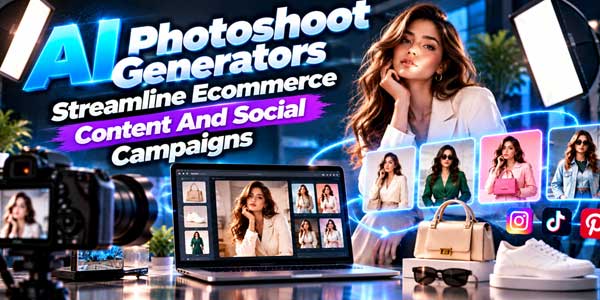
Brands that publish frequently benefit the most from this category. DTC stores, marketplace sellers, creators, affiliate sites, and agencies all need variation at scale. They need assets that look polished, but they also need enough speed to keep campaigns moving. AI photoshoot generators help bridge that gap. They give small teams a way to create more without carrying the cost of a large production operation every week.
The bigger story is not about replacing photography altogether. It is about making visual production more responsive. A team can start with a clear source image, use AI to test backgrounds and presentation styles, refine prompt direction, and produce channel-ready assets in much less time. That is a meaningful operational advantage for brands that compete on consistency, speed, and content volume.
Final Take:
AI photoshoot generators have become useful because they solve a real bottleneck: the demand for more visual content than traditional production alone can comfortably support. When used well, they help ecommerce teams create better product images, stronger social creative, and faster campaign variations. 1008.ai’s AI Photoshoot Generator is a good example of that shift because it focuses on practical outputs like product visuals, portraits, lighting control, and scene direction. For businesses that need to move quickly while keeping visual quality high, that makes it a tool worth watching.
 About the Author:Shota Amagasa writes about AI creative tools, ecommerce workflows, and practical digital content systems. Recent work focuses on how small teams use AI image generation, visual automation, and faster production pipelines to support product marketing and online growth.











Be the first to write a comment.