
Table of Contents
The Rise Of AI In The Graphic Design Industry:
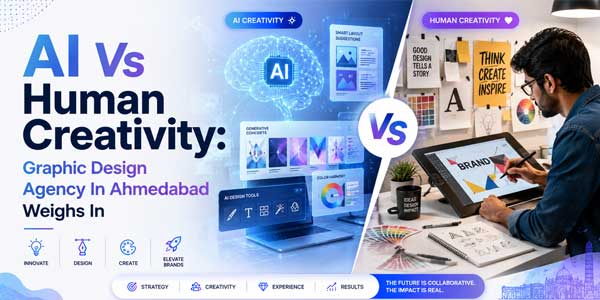
Artificial intelligence has moved from a novelty to a working tool on almost every designer’s desktop. Platforms that generate logos, mockups, and social banners in seconds have made design faster and cheaper than ever before. For business owners comparing quotes and timelines, that speed is genuinely appealing, and it has fuelled a real debate: can software replace the human designer, or does it simply change what a designer spends their time on?
The honest answer sits somewhere in between. AI is extremely good at certain parts of the design process and still weak at others. Understanding that split is the key to knowing what to expect when you hire outside help, and it is exactly where a seasoned graphic design agency earns its fee.
What AI Does Really Well In Design?
AI-driven tools are excellent at repetitive, high-volume, template-based work. Need twenty social media banners resized for different platforms by tomorrow morning? An AI-assisted workflow can produce serviceable drafts in minutes instead of hours. Automated background removal, colour correction, and layout suggestions all save real production time, which is why most professional studios now use these tools somewhere in their pipeline rather than avoiding them.
If you want a sense of how far browser-based design tools have come, this roundup of the best online tools to create social media posts is a useful starting point for anyone experimenting with AI-assisted graphics on a budget. AI also shines at rapid iteration: generating ten variations of a colour palette or icon style is something a machine can do almost instantly, giving human designers more raw material to react to and refine.
The Limits Of Machine-Made Design:
Where AI consistently struggles is context. A generated logo might look polished on screen, yet have no real connection to the business it represents, its history, or the market it competes in. Machines don’t understand a founder’s story, a regional audience’s cultural cues, or the subtle reason a competitor’s branding fails to resonate. That gap shows up quickly once a business tries to build a consistent identity around AI output alone.
It’s worth noting that plenty of these same failures existed long before AI entered the picture — generic icons, unreadable typography, colours that don’t survive printing. This overview of common mistakes made by logo designers lists errors that both novice human designers and unrefined AI tools tend to repeat, which says a lot about why raw automation still needs a trained eye watching over it.
Why Human Creativity Still Leads Branding?
Strong branding is a strategic exercise, not just a visual one. A human designer asks why a business exists, who it serves, and what makes it different, then translates those answers into shapes, colours, and typography that actually mean something. That kind of interpretive thinking, especially for a market as culturally layered as Gujarat, is not something a prompt-based tool can replicate on its own.
Designers also bring judgment that comes only from experience: knowing when a bold idea will work for a client’s audience and when it will alienate them. Anyone building a brand identity from scratch should study fundamentals like these logo design tips for budding designers, because these principles are exactly what separates a forgettable AI draft from a mark that a company can build a decade of recognition around.
How Skilled Agencies Blend AI With Human Insight?
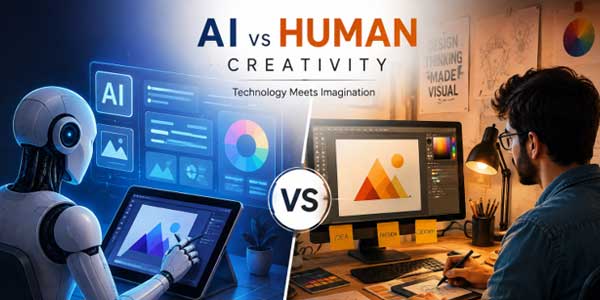
The agencies producing the best results today aren’t choosing between AI and human talent — they’re combining both. AI handles the grunt work: quick resizing, first-pass photo editing, and generating a wide spread of initial concepts. Designers then step in to shape, refine, and align that raw material with brand strategy. This hybrid approach is faster than a fully manual process and far more considered than a fully automated one.
Tools matter here too. Many studios lean on accessible resources such as this list of free online photo editors for quick edits, while keeping an eye on where the industry is heading through references like these logo design trends. Locally, agencies such as Triovate PVT LTD in Ahmedabad have adopted this same blended workflow — using AI to speed up production while keeping strategy, storytelling, and final creative decisions firmly in human hands.
What To Look For In A Graphic Design Agency In Ahmedabad?
If you’re evaluating design partners, a few questions cut through the noise quickly. Ask to see a portfolio of finished brand work, not just isolated logo files, so you can judge consistency across a full identity system. Ask how they use AI in their process; a confident studio will explain it openly rather than hide it. And ask about revision rounds and turnaround times, since a clear process is usually a sign of a mature, well-run creative operation rather than a one-person shop stitching together templates.
Pricing structure is another useful signal. Studios that price purely by deliverable count, with no room for strategy sessions or revisions, often lean heavily on templated or AI-only output to hit those numbers. Agencies that build in time for discovery calls, mood boards, and iterative feedback are usually the ones investing real human thought into the outcome, even if their process takes a little longer up front.
Local market understanding matters as much as technical skill. A designer who understands how Ahmedabad’s business landscape, language, and visual preferences differ from, say, Mumbai or Bengaluru will produce work that resonates faster with the intended audience, something no generic AI tool can account for on its own. Regional festivals, local colour associations, and even the tone businesses use in Gujarati versus English messaging all quietly shape how a design lands with its audience.
Final Thoughts: Creativity With A Human Signature
AI has genuinely changed what’s possible in graphic design, and ignoring it would be a mistake for any studio trying to stay competitive on cost and speed. But the agencies that stand out are the ones using AI as a tool rather than a replacement — letting automation handle the repetitive layers of production while human creativity continues to shape strategy, story, and the final decisions that make a brand memorable. That balance, more than any single piece of software, is what separates forgettable design from work that actually builds a business.
For businesses in Ahmedabad weighing their options, the practical takeaway is simple: don’t judge a design partner purely on how quickly they can turn around a first draft. Ask how they think, how they research a brand before opening any design software, and how much of the final output reflects a genuine understanding of your business rather than a generic prompt. That’s ultimately the difference between design that merely fills space and design that does real work for a brand.
Frequently Asked Questions (FAQs):
Q1. Can AI completely replace a graphic design agency?
No. AI can speed up repetitive production tasks like resizing, background removal, and generating first-draft concepts, but it cannot understand a brand’s story, strategy, or cultural context the way a human designer can. Most agencies use AI as a support tool, not a replacement for creative judgment.
Q2. Is AI-generated design cheaper than hiring a graphic design agency in Ahmedabad?
AI tools can lower costs for simple, high-volume tasks such as social media banners. However, for brand identity work like logos and full visual systems, a professional agency typically delivers more strategic, original, and legally safe results than AI alone.
Q3. How do design agencies in Ahmedabad use AI in their process?
Most local agencies, including Triovate PVT LTD, use AI for early-stage ideation, quick photo edits, and rapid mockups, then rely on human designers to refine, adapt, and finalise the work so it aligns with the client’s brand and audience.
Q4. What should I ask before hiring a graphic design agency?
Ask to see full brand portfolios (not just single logos), how they use AI tools in their workflow, what their revision process looks like, and how familiar they are with your local market and audience.
Q5. Will AI-generated logos face copyright or trademark issues?
It’s possible. AI tools are trained on large datasets and can sometimes produce designs that closely resemble existing trademarks or copyrighted work. A human designer reviewing and refining the output helps reduce this risk, which is one more reason agencies keep people in the loop.
 About the Author:
This article was contributed by Tapan Vaid on behalf of Triovate PVT LTD, a graphic design agency in Ahmedabad helping brands combine strategic design thinking with modern production tools.







Be the first to write a comment.