
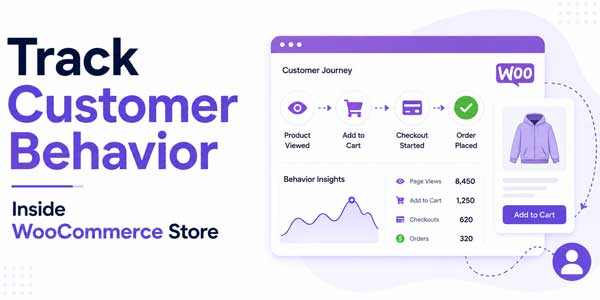
Have you ever looked at your WooCommerce store analytics and thought, “Okay, people are visiting, but what are they actually doing?” Because traffic numbers only tell half the story.
A store owner I spoke with once had this exact problem. Every morning, he’d open his dashboard, check visitor counts, and feel pretty good about the numbers. Hundreds of people were coming in every day. Sometimes more.
The weird part? Sales weren’t moving much. At first, he blamed his products. Then pricing. Then advertising. None of those were the real issue.
The problem was that he had no idea how visitors were behaving after landing on the store. Were they finding the products they wanted? Were they getting lost? Were they abandoning the checkout page?
Nobody knew. That’s where many WooCommerce stores struggle. Getting traffic is one thing. Understanding that traffic is something else entirely.
Customer behavior tracking fills that gap. It helps store owners see what happens between the first click and the final purchase. Sometimes what you discover is surprising.
Table of Contents
The Day the Numbers Started Making Sense:
Imagine someone walks into a physical store. They stop at the entrance. Look around. Pick up a product. Put it back. Walk to another shelf. Spend five minutes comparing options. Then leave.
A store manager watching this would learn quite a bit from that interaction. Online stores aren’t much different. The only difference is that customer actions happen behind a screen.
Most visitors won’t tell you what confused them. They won’t send an email explaining why they left. They disappear. That’s why behavior tracking matters.
Every click leaves a clue. Every search says something. Every abandoned cart tells a little story. When enough of those stories come together, patterns start appearing. Patterns are where growth happens.
Product Pages Can Tell You More Than Sales Reports:
One of the easiest mistakes store owners make is judging products purely by sales. Sounds reasonable. But it can be misleading. Let’s say a product receives 1,000 views this month. Huge interest. Yet only a handful of purchases happen. That isn’t necessarily a product problem. It might be:
- Weak product images
- Confusing descriptions
- Missing reviews
- Slow page speed
- Pricing concerns
Something is creating hesitation. The interesting part is that customers are already showing interest. They’re visiting the page after all. They’re practically raising their hand and saying, “I’m interested.”
Then something changes their mind. Your job is figuring out what. That’s where behavior tracking becomes valuable. Not because it gives answers immediately. Because it helps you ask better questions.
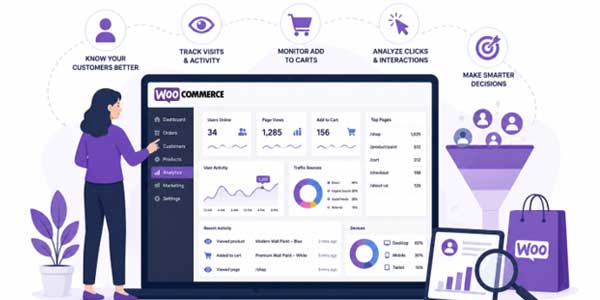
Customers Are Constantly Telling You What They Want:
Most store owners don’t realize how much information sits inside the search bar. Think about it. Nobody searches randomly. When someone types a phrase into your store search, they’re revealing exactly what they’re looking for.
Sometimes it’s obvious. Sometimes it’s not. Maybe visitors keep searching for a product category you don’t stock. Interesting. Maybe they’re searching for an item you already sell but can’t easily find. That’s a different problem.
Either way, customer searches often expose opportunities that sales reports never show. The funny thing is that many businesses spend thousands trying to understand customer intent while ignoring the intent customers are already providing for free.
Cart Abandonment Isn’t Always Bad News:
Let’s talk about abandoned carts. Store owners hate them. Understandably. Someone adds $150 worth of products to a cart and then vanishes. Frustrating. But here’s the thing. Not every abandoned cart represents a lost customer.
People get distracted. Their phone rings. Kids need attention. Work gets in the way. Life happens. A visitor might leave today and return tomorrow. Or next week. The real value comes from identifying where abandonment happens most often. For example:
- Shipping page
- Payment page
- Account creation step
- Coupon section
Once you know where customers hesitate, improvements become easier to make. That’s when tracking starts paying for itself.
Understanding Why Some Customers Always Come Back:
Every WooCommerce store has them. The regulars. Customers who repeatedly purchase. Sometimes they spend more than anyone else. Sometimes they recommend the store to friends. They’re valuable.
The challenge is identifying what makes them different. Behavior tracking helps answer that question. You might discover they:
- Browse certain categories more often
- Purchase specific product types
- Visit through email campaigns
- Spend more time reading descriptions
Those insights can help you create better experiences for similar customers. Not by guessing. By learning from real behavior.
Customer Support Gets Easier Too:
Here’s something people rarely mention. Behavior tracking doesn’t only help marketing teams. Support teams benefit as well. Imagine receiving a customer inquiry and immediately seeing their browsing activity, previous orders, and shopping history.
The conversation changes. Suddenly, support becomes faster and more personal. Having access to WooCommerce customer history can provide valuable context before the first reply is even sent. Customers notice that. Maybe they don’t always say it. But they notice.
Security Isn’t Usually the First Reason People Track Behavior:
But maybe it should be. Unusual browsing patterns often reveal issues before they become serious. Repeated login attempts. Suspicious account activity. Unexpected access requests. These things leave footprints.
Stores operating a private store for the WooCommerce environment often pay particular attention to these details because access restrictions are a major part of their business model. Tracking activity creates visibility. Visibility creates control. It matters a lot online.
Conclusion:
Customer behavior tracking isn’t really about data. Not entirely. It’s about understanding people. The visitor compares three products before deciding.
The customer who keeps returning to the same page. The shopper who fills a cart and comes back three days later to complete the purchase. Those actions mean something.
When you start paying attention to them, your WooCommerce store stops feeling like a collection of numbers and starts feeling like a living business with real customers making real decisions. That’s usually when the best improvements begin to happen.
 About the Author:
Inam Ullah Dar is a content writer by passion and profession. He started his journey with Motif Creatives. He primarily writes for guest post articles falling under various niches. The main area of his interest and expertise is Web design & Digital marketing. He enjoys reading and writing about healthcare, mindfulness, and well-being to educate people about being happier and lively. His work has been published on many high-authority websites. He believes that writing is an effective way to communicate at better levels./p>













Be the first to write a comment.