
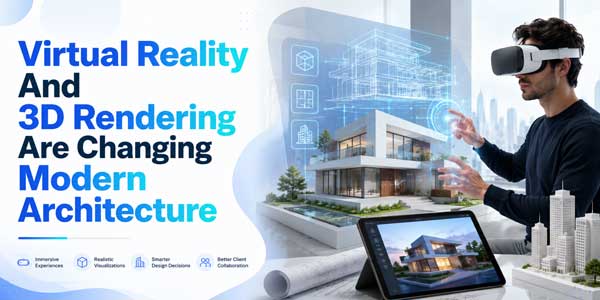
Architects are officially ditching paper blueprints for digital worlds. For decades, designing a house meant staring at flat lines on a table and trying to guess how a room would actually feel once built. Honestly, that whole era is dead. Today, virtual reality and 3D rendering are turning basic floor plans into fully interactive spaces you can explore in real time. You can walk through unbuilt rooms, swap out luxury finishes on the fly, and catch massive design flaws way before anyone digs a foundation. Read on to find out how.
Table of Contents
Flat Drawings Are Officially Out:
Look, paper blueprints had a long run, but they were always a massive pain for the average client. Architects drew thin black lines, marked where doors went, and just expected regular people to picture the whole thing in 3D instantly. The big problem? Most people simply can’t look at a flat sheet of paper and visualize a real living space in their heads.
You had to guess ceiling heights. You had to guess if a hallway felt too tight, or if the living room would get any actual sunlight during the day. That gap in understanding usually led to bad miscommunication, unexpected extra costs, and super stressful redesigns right in the middle of active construction. A layout that looked completely fine on a flat piece of paper often felt cramped, dark, or awkward once the real physical frames went up on site.
Unlocking Top Properties With Virtual Tours:
Combining VR and 3D modeling gives the real estate market a huge boost, especially in places with hot property markets like Australia. Developers don’t have to wait for a build to finish to start showing off luxury developments anymore. They can walk buyers through off-plan properties anywhere in the world, no travel required.
Say you want to has to offer. You don’t have to wait years for construction crews to wrap up the tower or pour the top floors. Pop on a VR headset, step onto the digital balcony, check out the unobstructed river views, and tour the entire open-plan layout straight from your current couch. Easy as that. You get to inspect the kitchen layout, check out the master suite, and buy with actual confidence before the ground floor is even finished.
The Rise Of 3D Digital Rendering:
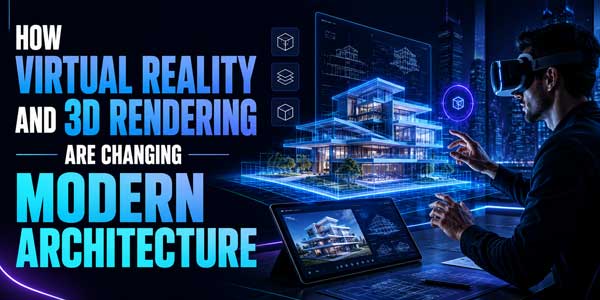
3D rendering completely flipped the architectural workflow by creating exact digital twins of buildings long before any ground was broken. Modern software now pumps out hyper-realistic renders showing every tiny detail, from the rough texture of stone walls to the smooth polish on a kitchen island and the natural wood grain under realistic lighting.
Architects use these detailed renders to catch structural mistakes early in the planning phase. At the same time, clients get to click around and test out different paint colors, window setups, or lighting fixtures in seconds. Zero guesswork. You see what you are paying for up front, which keeps the decision-making process moving along without the usual headaches or delays.
Stepping Into Virtual Reality:
3D pictures are great, sure, but VR lets you actually live in space for a second. Put the headset on, and you’re suddenly standing inside an unbuilt structure. You aren’t staring at a flat monitor screen anymore; you’re physically moving around the digital floor plan.
Walk down the hall. Look up at the high double ceilings. Watch how afternoon sunlight streams through the windows at different times of day. Your brain processes the environment like a real, physical space, which wipes out any leftover doubts about room proportions, furniture placement, or overall comfort long before concrete gets poured or wooden frames get nailed together.
Smarter Construction And Less Waste:
When architects, builders, structural engineers, and clients are all looking at the same 3D digital model, team communication improves instantly. In the old days, different contractors often interpreted paper plans slightly differently, and that disconnect always meant arguments, long delays, and extra costs mid-build. Now? Everyone meets inside the same virtual model.
Want to push a wall back two feet or swap out heavy marble for timber? Click a button. Done. Fixing a mistake digitally costs basically zero dollars. Tearing down real drywall or concrete on a noisy, active build site burns through cash instantly and generates heaps of material waste. It transforms building into a clean, hands-on digital process that yields better, smarter homes every single time.
The New Era:
Lastly, virtual reality and 3D rendering aren’t just cool gadgets for tech fans; on the contrary, they’ve permanently changed how we buy, build, and design real estate. Whether you’re an architect working on a new high-rise or a homebuyer eyeing an off-plan apartment, these digital tools make the whole journey way simpler and far more exciting. The future of architecture is right there for you to step directly into today.
 About the Author:
Callum Hewitt is a real estate writer on a continuous mission to connect buyers with the top real estate agents Perth has to offer. Specializing in high-end properties and modern architecture, he provides readers with insights into luxury living and elite homes across Western Australia.













Be the first to write a comment.