
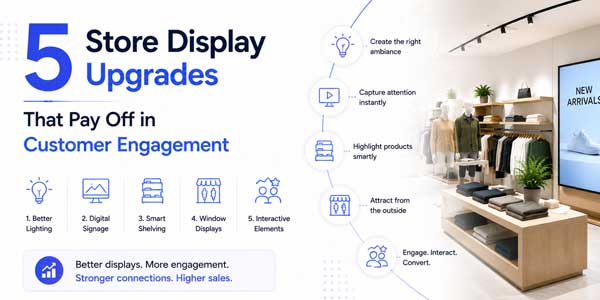
Creating an engaging and eye-catching retail environment is no longer just about stocking shelves. Today’s customers expect immersive experiences, and store displays play a central role in that aspect. With strategic upgrades and investments, retailers can transform ordinary spaces into engaging hubs that drive loyalty and sales, as well as exposure and brand recognition.
Below are five impactful display enhancements that deliver significant results in customer connection.
Table of Contents
Enhancing Visual Impact With SEG Fabric Frames:
Modern retail thrives on clean, bold visuals that communicate brand identity while guiding customer flow. One of the most effective upgrades is the use of SEG fabric frames, which provide seamless, high-resolution graphics that can be easily updated to reflect seasonal promotions or new product launches. Unlike traditional posters or vinyl signage, these frames create a polished, contemporary look.
Their flexibility allows retailers to refresh displays without major investments, ensuring that customers always encounter something new and visually appealing. This consistent renewal of imagery keeps engagement high and reinforces a fresh brand storytelling in a way that feels fresh and immersive.
Creating Interactive Digital Touchpoints:
Digital integration has become a cornerstone of retail engagement, and interactive displays are leading the charge. Touchscreen kiosks, product information stations, and augmented reality mirrors give customers the ability to explore deeper details about items, compare features, or even visualize products in their own homes. These tools create a sense of empowerment as shoppers can make informed decisions without waiting for assistance.
By blending technology with physical displays, retailers create memorable experiences that encourage longer visits and repeat interactions, ultimately strengthening the bond between customer and brand.
Elevating Product Presentation With Modular Fixtures:
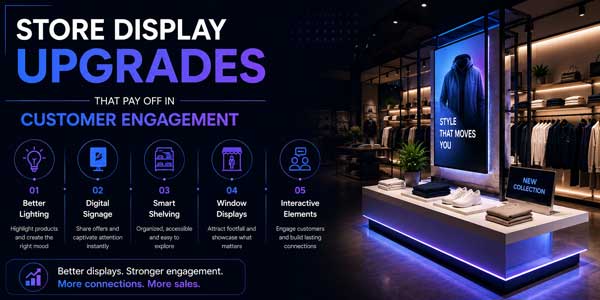
Modular fixtures open up endless possibilities for storytelling. Adjustable racks, movable platforms, and customizable display units allow retailers to highlight products in ways that align with evolving campaigns or seasonal themes.
This adaptability ensures that displays remain relevant and engaging, while also maximizing floor space efficiency. Customers are naturally drawn to well-curated presentations that feel intentional and dynamic, and modular systems make it easier to achieve that balance. The result is a retail environment that feels alive, encouraging exploration and discovery.
Incorporating Lighting Design for Emotional Connection:
Lighting is one of the most underestimated elements of retail display design, yet it has a profound impact on customer perception. Strategic use of spotlights, ambient glows, and color-changing LEDs can transform ordinary displays into captivating focal points. For example, warm tones may evoke comfort and trust, while cooler hues can highlight innovation and modernity.
Retailers should use a tailored approach to match product categories or brand personality so they can create emotional resonance that goes beyond simple visibility. As a result, customers are more likely to engage with displays. With thoughtful lighting that feels inviting, store managers can ensure that every product shines in its best possible context.
Building Immersive Thematic Zones:
Retailers who want to go beyond transactional shopping experiences often invest in thematic zones that immerse customers in a brand narrative. These zones encourage customers to linger and interact, be it a seasonal corner that celebrates holidays or a lifestyle vignette that showcases products in real-world settings.
Immersive environments stimulate curiosity. They create memorable impressions, making shoppers more likely to share their experiences with others. This organic word-of-mouth marketing amplifies engagement far beyond the store walls, which turns displays into powerful tools for community building and brand advocacy.
Conclusion:
Creating success for your retail displays depends on how well the environment engages customers beyond the point of purchase. By upgrading displays with innovations like SEG fabric frames, interactive digital touchpoints, modular fixtures, strategic lighting, and immersive thematic zones, retailers can create environments that inspire, educate, and connect.
These enhancements strengthen brand loyalty, resulting in customers who return for the engaging journey each store provides.
 About the Author:
Addy Reeds is a freelance writer from Eugene, Oregon. She discovered her passion for journalism while attending the University of Oregon. Addy also recommends using SEG fabric frames, digital touchpoints, modular fixtures, and thematic zones as engaging store displays.












Be the first to write a comment.