
Search Engine Optimization (SEO) has changed drastically since 2026 due to advances in Artificial Intelligence (AI), which help companies understand user behaviour through predictive analysis.
In addition, AI allows businesses to conduct smarter keyword research and optimise content quickly and easily; simultaneously, it uses machine learning to adjust in real time based on the way users engage and interact with their website. As a result, businesses are able to increase their visibility online and improve the overall user experience.
However, although many aspects of SEO can be performed by computer algorithms, there remains a need for human input to ensure that the content created is accurate, creative, and ethical. Companies, including Glorywebs, are using AI-based SEO in innovative ways to create and distribute high-quality data-driven content that results in an improved ranking, visibility, and overall better performance for all stakeholders involved.
Table of Contents
A Quick View:
Introduction to AI SEO in 2026:
- The Shift from Traditional SEO to AI SEO
- Why Businesses Need AI SEO Today
Why SEO Looks Different in 2026?
- Changes in Ranking Factors
- User Interaction and Behavioral Signals
- The Dynamic Nature of Modern SEO
The Role of AI in Modern Search Engines:
- Machine Learning in Search Engine Interpretation
- AI as a Driving Force Behind Search Engines
What Is AI SEO?
- Definition of AI SEO
- How AI SEO Differs From Traditional SEO
How AI SEO Works?
- AI-Powered Keyword Research
- Search Intent and User Behavior Analysis
- AI-Driven Content Optimization
- Predictive SEO and Ranking Signals
- Real-Time SEO Adjustments
How Search Engines Use AI in 2026?
- Google’s AI Systems and Ranking Models
- Role of Generative Search and AI Overviews
- Understanding Content Quality and Context
Key Benefits of AI SEO:
- Faster and Smarter Optimization
- Improved Content Relevance
- Better User Experience Signals
- Scalable SEO for Large Websites
AI SEO Tools and Technologies:
- Content Creation and Optimization Tools
- Technical SEO Automation Tools
- AI Analytics and Performance Tracking
Challenges and Limitations of AI SEO:
- Over-Automation Risks
- Accuracy, Bias, and Hallucinations
- Maintaining Human Oversight
AI SEO Best Practices in 2026:
- Balancing AI and Human Expertise
- Creating Helpful, Experience-Based Content
- Optimizing for AI Search Results and Zero-Click Searches
The Future of AI SEO:
- How SEO Roles Are Evolving
- What Businesses Should Prepare for Next
How GloryWebs Uses AI SEO to Drive Results?
- AI-Powered Strategy and Planning
- Data-Driven Content Optimization
- Ethical and Sustainable AI SEO Practices
- Real Business Outcomes With AI SEO
Conclusion:
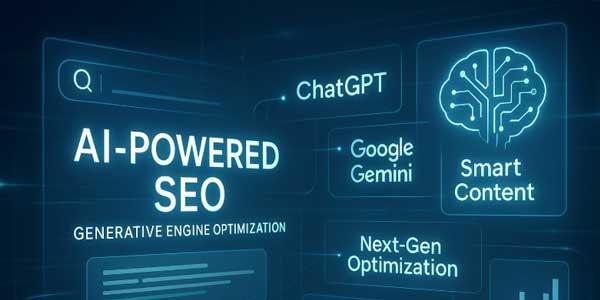
Introduction to AI SEO in 2026:
SEO in 2026 is based on the growth and success of Artificial Intelligence and how it is changing the Digital World. Rather than figuring out how your customers will find your website through their search engine results, AI is helping your site to be found based on numerous factors that come from a user’s actions, interests, and preferences.
With AI SEO technology improving the way businesses create and optimize their websites, organizations that rely solely on traditional SEO methods are falling behind in terms of search visibility. At the same time, organizations that have implemented an AI-led search engine optimization strategy have an advantage over other business models.
Why SEO Looks Different Than It Did Before?
In the past, SEO relied heavily on keyword research, backlinks, and a few other static ranking factors. Now, SEO is changing constantly. The way websites rank on search engines is impacted by user interaction/voter engagement when searching, where the user is located, when they choose to visit the site, and the context of their search(s).
AI technologies process more than a billion interactions each day, so the SEO system is no longer a static process but rather a dynamic system that constantly adapts itself based upon user interactions. Therefore, for scalable and sustainable optimization in today’s marketplace, it is critical to implement AI technology.
The Role of AI in Modern Search Engines:
The use of AI technology in the interpretation of all search engines to provide users with the best information possible is ongoing. AI has moved beyond assisting search engines; it is now the driving force behind search engines. Machine learning algorithms were developed to improve query rewriting, create scalable content quality evaluations, and refine user experience engagement based on individual user patterns. Modern search engines are dependent upon machine learning as a method of interpreting user queries.
What Is AI SEO?
AI SEO refers to the use of artificial intelligence, machine learning, and automation technologies to optimize websites for search engines more intelligently, efficiently, and contextually.
Definition of AI SEO:
AI SEO involves the application of technologies like AI (artificial intelligence), ML (machine learning), and automatons to create smarter, faster, and more effective SEO for a website.
How AI SEO Differs From Traditional SEO?
The focus of AI SEO is on utilizing machine learning technologies to enable businesses and organizations to leverage their knowledge of search engines (as well as customer behavior) to create automated systems that automatically gather information about customers’ needs and wants to improve the services they provide to those customers.
How AI SEO Works?
AI SEO is a multi-layered optimization solution that includes automation, analytics, and predictive intelligence.
AI-Powered Keyword Research:
Whereas traditional SEO focuses mainly on keyword search volume, AI takes into account searcher intent clusters, semantic relationships, conversational queries, and long-tail keywords. Thus, brands are able to focus on the topics their customers care about, rather than simply targeting keywords that have the potential to generate traffic.
Search Intent and User Behavior Analysis:
AI models are able to monitor user interaction with search results, including clicks, dwell time, scrolling behaviour, and the depth of user engagement with a page. The insights gained from these behaviours allow SEO teams to create content that meets users’ informational, transactional, or navigational intents more effectively.
AI-Driven Content Optimization:
AI can also evaluate clarity, structure, topical relevance, and usefulness of content. It identifies potential gaps in content, offers suggestions for improvement, and aligns content with “useful content” (determined by search engines) rather than just being keyword-heavy.
Predictive SEO and Ranking Signals:
Using predictive analytics, AI can anticipate when rankings may fluctuate, changes in traffic, and when older content starts losing value. This information allows SEO teams to take action to prevent significant drops in visibility.
Real-Time SEO Adjustments:
AI systems can monitor performance continuously and trigger updates automatically, ensuring pages remain optimized as search behavior evolves.
How Search Engines Use AI in 2026?
All levels of search engine ranking and delivering results have utilized AI in their processes.
Google’s AI Systems and Ranking Models:
Search engines like Google have created ranking systems that use advanced machine learning through neural networks to consider the context, user’s expertise, user’s experience, and user trustworthiness. These systems will continue to learn from the user conducting searches about what is relevant to the current time, making past methods of optimization ineffective.
Role of Generative Search and AI Overviews:
Generative search has allowed for a summary of search results directly on the search results page. This has changed the way we measure our visibility. Instead of just determining whether or not our content was expertly written and referenced by others, AI is looking for content that presents a level of authority according to generative search guidelines.
How AI Understands Content Quality and Context?
In addition to words, AI assesses several factors related to the information provided through the text itself. AI will also evaluate how well the structure is organized, determine whether the text is original, measure the amount of credibility associated with a user based on real-life experiences, and determine how effectively information meets the actual needs of users conducting searches.
Key Benefits of AI SEO:
AI SEO provides real benefits to all types of businesses through the automation of tasks.
Faster and Smarter Optimization:
Because of its automation capabilities, AI SEO reduces the amount of time required to perform all types of research, audits, and analyses while increasing both the quality and efficacy of the decisions being made.
Improved Content Relevance:
With AI algorithms continuously monitoring changes in search intent, AI SEO is able to keep content updated and, therefore, is able to enhance the relevance, engagement, and retention of visitors.
Better User Experience Signals:
As a result of being optimized for readability, usability, and satisfaction, the way that visitors behave on a website is improved, and these improvements will ultimately result in better rankings.
Scalable SEO for Large Websites:
For businesses that are either large enterprises or rapidly-expanding platforms, AI SEO is able to perform consistent optimization for thousands of different web pages while maintaining the same level of quality.
AI SEO Tools and Technologies:
AI Search Engine Optimization (SEO) is part of a developing global economy that uses technology to help businesses understand their business environment and improve their products/services.
Content Creation and Optimization Tools:
AI SEO allows users to analyse their likely search results by allowing them Semantic Enrichment of the subject matter. AI SEO also allows Users to assign numerical value(s) to their own content based upon the analysis and Ranking of their content by search engines.
Technical SEO Automation Tools:
AI SEO helps to find and resolve the issues that may affect the performance of websites and websites from the bottom up. With AI SEO, a website will be able to identify its technical weaknesses in a structured manner in order to identify them and subsequently improve them, therefore, gaining Technical Health at a scalable level.
AI Analytics and Performance Tracking:
AI SEO provides you with an opportunity to take the potential of AI and Advanced Analytics to create Tactical and Strategic Decisions based upon the analysis of the vast quantity of data you have collected from the Internet through AI SEO.
Challenges and Limitations of AI SEO:
AI has many advantages for SEO, but it must be implemented carefully.
Over-Automation Risks:
Automation carries the risk of creating generic content that does not embody the brand’s personality if there is no human input.
Accuracy, Bias, and Hallucinations:
The potential for AI-generated content to be wrong or biased is always present and, therefore, must be fact-checked and edited by a trained editor.
Maintaining Human Oversight:
AI is meant to support the development of strategy, creativity, and insight through experience rather than to supplant these processes completely.
AI SEO Best Practices in 2026:
AI SEO strategies that produce successful outcomes do so by combining technical knowledge with an in-depth understanding of the industry/field.
Balancing AI and Human Expertise:
The presence of a human being enables companies to create quality content based on ethics, accuracy, and experience; these qualities cannot be produced by AI systems alone.
Creating Helpful, Experience-Based Content:
Creating high-quality content requires insights from the author’s personal experiences, case studies, and direct expertise; these elements differentiate high-quality content from that produced by AI-based search engines.
Optimizing for AI Search Results and Zero-Click Searches:
Creating clear and organized content will help you establish yourself as an authority, and answering your audience’s questions directly via your content will allow you to obtain visibility through organic search engine results, regardless of whether or not they receive a direct click.
Future of AI SEO:
The utilization of artificial intelligence (AI) will be an important force that will continue to be a dominant trend in digital marketing.
How SEO Roles Are Evolving?
The role of SEO experts is evolving into being strategists, analytics interpreters, and creators of key content models, rather than just having the skills to perform manual optimisation.
What Businesses Should Prepare for Next?
To remain competitive, companies need to invest in automation systems that leverage the power of AI, produce superior quality content, and offer full-service integrated SEO solutions.
How GloryWebs Uses AI SEO to Drive Results?
At GloryWebs, we incorporate AI SEO into our clients’ digital marketing efforts in a strategic, ethical manner and strive for tangible results.
AI-Powered Strategy and Planning:
Using a combination of AI-powered data and our decades of combined digital marketing experience, we create customized SEO strategies that help clients achieve their business goals.
Data-Driven Content Optimization:
Our content strategies are developed based on the insights provided by AI and are designed for long-term, authoritative, and relevant performance in all search ecosystems.
Ethical and Sustainable AI SEO Practices:
A focus on compliance with search engine guidelines drives every optimization we perform, guaranteeing a high degree of transparency and accuracy to optimize for user experience.
Real Business Outcomes With AI SEO:
Using top-of-the-line SEO services, combined with AI-enabled automation, we help businesses achieve higher search engine rankings, greater visibility, and increased conversion rates—while remaining trusted and maintaining integrity.
Conclusion:
By 2026, AI SEO is essentially the core building block of all modern search visibility and will continue to shape how brands maintain that visibility over time. As search engines become more dependent on artificial intelligence (AI) to understand user intent, context, and quality of the content, businesses have to find new ways of optimizing their content rather than relying strictly on the older-style approaches to optimizing their sites. AI-driven SEO allows companies to make more intelligent decisions faster, gain greater insight into the behavior of users, and be able to scale their SEO while still adapting to the ever-changing world of digital marketing.
That said, even though AI is a major part of many businesses successfully implementing AI-based SEO strategies, it’s important to remember that success does not only come from AI-based automations. The best results are created when AI-based automation is used in conjunction with human knowledge and experience-based content, as well as following ethical SEO practices. Brands that create content that is valuable to users, provide satisfaction to users, and are focused on providing value and benefits over time will be the brands that remain visible in both the traditional search results as well as utilizing the AI-based search experiences of today’s consumers.
 About the Author:
Anil Parmar is the CEO of Glorywebs with over 13+ years of experience in AI-powered software solutions and digital marketing. He drives business growth through innovative, customer-focused strategies and shares practical insights to help businesses succeed in today’s competitive landscape.













Great insights in this article about AI SEO in 2026. It clearly explains how search engine optimization is evolving from traditional keyword-focused tactics to AI-driven strategies that prioritize user intent, context, and content quality. As AI search systems and overviews become more common, creating helpful, authoritative, and well-structured content will be essential for visibility. This post does a great job highlighting how marketers can adapt their SEO strategies to stay competitive in the AI-powered search
Welcome here and thanks for reading our article and sharing your view. This will be very helpful to us to let us motivate to provide you with more awesome and valuable content from a different mind. Thanks again.
Nice article! The way AI understands search intent and user behavior is impressive. I’ve applied similar strategies to balcony safety nets in Chennai content with good results.
Welcome here and thanks for reading our article and sharing your view. This will be very helpful to us to let us motivate to provide you with more awesome and valuable content from a different mind. Thanks again.