

Here’s the truth – when most of us walk into a hardware store or browse supplies online, our eyes go straight to the cheapest option. It makes sense. Why spend more when something does the same job, right? But when it comes to electrical materials, that logic can quietly cost you a lot more than you saved.
Here’s a breakdown of why skimping on wires, outlets, and fittings tends to backfire, and why going with quality from the start is almost always the smarter financial move.
Cheap electrical materials aren’t really cheaper. They’re just expensive problems that haven’t happened yet.
Table of Contents
The Real Cost of Cheap Wiring:
Just think you have to renovate a room, and for that you need some wire, a few outlets, or maybe a circuit breaker or two. You then happen to find a discount option, which is half the price of the branded stuff. You eventually buy it, thinking you have saved a lot of money.
But issues arise 6 months later when an outlet stops working. Then another. Maybe a breaker trips constantly. In the worst cases, this happens more than people think due to low-grade wiring overheating inside your walls. You can’t see it. You can’t smell it until it’s already a problem.
Now you’re paying for an electrician to rip out walls, replace the wiring, and fix the damage. That cheap wire just became the most expensive decision you made during the renovation. What felt like savings upfront turned into a repair bill, potential insurance headaches, and a whole lot of stress.
What “Quality” Means in Electrical Materials?
Quality electrical materials aren’t just about a brand name or a higher price tag. They’re about consistency and compliance. When a wire or fitting meets proper standards, it means:
Conductivity:
The copper or material inside is pure enough to carry current without excessive resistance or heat
Durability:
The insulation around the wire won’t crack or degrade quickly, especially in walls where the temperature can fluctuate
Reliability:
Fittings, connectors, and outlets will hold a proper connection over years of use, not just the first few months
Budget alternatives often cut corners on one or all three. And since most of this is hidden inside your walls, you won’t know until something fails.
The Hidden Costs That Add Up Quietly:
Beyond the dramatic failure scenario, there are smaller ways cheap materials drain your wallet without making it obvious:
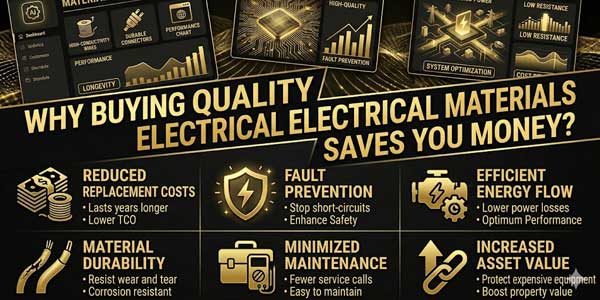
Higher energy bills. Poor-quality wiring creates more electrical resistance. That resistance turns into heat instead of usable power. Your appliances work harder, your electricity meter ticks faster, and your monthly bill creeps up without any obvious reason.
Frequent replacements. A cheap outlet that stops gripping plugs firmly, a switch that feels loose after a year, a connector that keeps coming undone, these aren’t just annoying. Every replacement means more materials, more labour, and more time. Quality components last a decade or more without a second thought.
Insurance complications. If a fire or electrical fault occurs and an inspector determines substandard materials were used, your insurance claim can get complicated fast. Some policies have clauses around non-compliant installations. That’s a risk most homeowners don’t even know they’re taking.
Property value impact. If you ever sell your home, an electrical inspection is part of the process. Outdated or subpar wiring can flag issues that buyers use to negotiate down the price, or walk away entirely.
Where to Find Quality Without Overpaying?
Here’s the good news: buying quality doesn’t mean buying the most expensive thing on the shelf. It means knowing what to look for and where to shop.
For homeowners doing renovation work or smaller projects, the best approach is to buy from a dedicated electrical supplier rather than a general big-box retailer. Specialized suppliers stock materials built to local codes and industry standards. The staff actually know what they’re selling. And the range of certified products is simply broader.
If you’re based in Ontario, for example, sourcing from a reliable electrical wire supply Toronto distributor, rather than grabbing the cheapest rolls off a general retail shelf, means you’re more likely to get wire that meets Canadian Electrical Code requirements, has proper gauge markings, and will perform safely for decades.
Similarly, working with reputable electrical supplies Toronto providers gives you access to products that have been properly tested and certified, so you’re not gambling on whether the insulation will hold up or the connectors will stay firm.
You don’t need to spend a fortune. You just need to buy from somewhere that takes quality seriously.
A Simple Way to Think About It:
Think of electrical materials the way you’d think about the foundation of a house. Nobody sees the foundation once the house is built. It’s easy to cut corners there, and you’d never notice immediately. But ten years down the road, every crack in the walls, every uneven floor, every door that won’t close right, it all traces back to that foundation.
Wiring is your home’s electrical foundation. Done right once, with quality materials, it quietly does its job for decades. Done cheaply, it quietly builds toward problems you’ll have to pay someone to fix at the worst possible time.
Quick Recap: Why Quality Electrical Materials Pay Off:
- Fewer repairs and replacements over time
- Lower energy bills from less resistance and heat loss
- No insurance complications from non-compliant materials
- Better home value at inspection time
- Peace of mind, it just works, quietly, for years
The Bottom Line:
Nobody wants to spend more than they have to. But electrical materials are one of those areas where the upfront cost is genuinely the smaller number. The real cost shows up later, in repair bills, energy waste, and the kind of stress that comes with realizing something is wrong inside your walls.
Buying quality electrical materials isn’t about being extravagant. It’s about being smart. Spend a little more now, and the wiring you never think about will quietly do its job for the next 20 years. That’s what real savings look like.
 About the Author:
I am Suzie Martin, working as a professional guest blogger and content writer at Hudco Electrical Supply. From product descriptions to technical articles and SEO content on various topics, I have honed my skills in delivering engaging and optimized written materials.













Be the first to write a comment.