
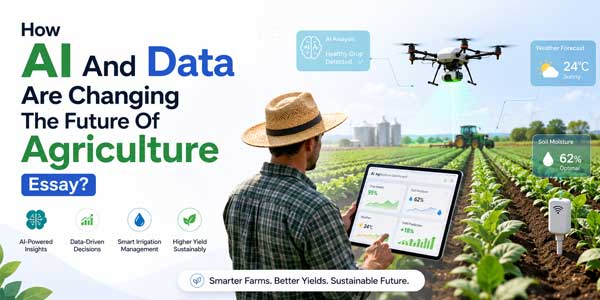
Agriculture is undergoing a significant transformation that is driven by the need to overcome the challenges of unpredictable weather, rising costs, limited access to water, labor shortages, and a growing population. The most promising ways that agriculture is evolving involve the use of artificial intelligence and data.
Artificial intelligence enables the identification of patterns and relevant information within extensive sets of data, thus helping people make better-informed decisions. Combined with valuable data, artificial intelligence (AI) can help farmers make better agricultural decisions and manage their operations more efficiently and profitably.
Table of Contents
Why Is AI Valuable in Agriculture?
AI refers to the ability of computers to mimic human decision-making processes. Therefore, utilizing AI in agriculture means using it to operate, manage, and make decisions based on information acquired from agricultural production. While humans excel at identifying patterns, AI can help recognize additional patterns that may not be evident at first.
For instance, a moisture sensor may alert a farmer to a dry spot in the field. Meanwhile, AI can assist the farmer in making better-informed decisions on whether to water that particular area or adopt different measures.
AI can be applied in farming through precision agriculture, which employs data and AI to ensure that resources are used most effectively. Precision agriculture enables farmers to operate in the most resource-efficient way by targeting specific areas of a field during sowing or harvesting to minimize waste.
How Are Data Changing Decisions Made on Farms?
The importance of data in precision agriculture cannot be overstated. Farmers may utilize data from various sources, such as software programs, sensors, drones, and machinery.
For instance, a farmer may use data obtained from a drone to identify causes of poor yield in certain areas and take countermeasures. In general, data enable farmers to make informed decisions with minimal guesswork and assumptions based on past experiences.
Moreover, data allow farmers to continually evaluate the effects of their decisions on their farms. This way, farmers can improve their understanding of their operations by relying on the insights gained from their data to guide future decisions.
Smart Technologies in Precision Agriculture
The following are examples of smart technologies currently used in precision agriculture:
- Drones and satellites are used to capture aerial images of fields to detect diseases, insect pests, and nutrient-deficient areas.
- Soil moisture sensors help farmers determine where and when to water their farms.
- Weather data combined with AI can predict threatening weather conditions, such as late frosts, and help farmers respond appropriately and minimize damage.
- Digital cameras and computer software can detect pests and diseases and provide early warnings to farmers.
- GPS-guided machinery helps monitor and maximize fuel use and ensure that agricultural machinery adheres to best practices regarding sowing and harvesting.
- Real-time soil water data obtained from moisture sensors may help AI determine when and where to apply fertilizers.
Smart Irrigation Technologies:
Water is a vital agricultural resource, and its availability and distribution pose significant challenges to farmers. Water can either be in surplus or deficient, depending on the region and time of year. AI, guided by moisture data and weather forecasts, helps farmers determine the best time to water their farms. Consequently, smart irrigation enables farmers to maximize water use efficiency while minimizing waste, especially in arid regions.
Moreover, AI can help farmers respond to threats such as frost and disease by using the data to make informed irrigation decisions. These technologies would enable farmers to adopt a more strategic approach to managing their crops.
Technologies Used to Control Pests and Diseases:
Controlling pests and diseases is often necessary for maximizing yield. However, traditional manual inspection methods are time-consuming and may be challenging, especially for larger farms. AI can help farmers monitor fields for signs of disease and insects using digital imagery, such as photos taken with regular cell phone cameras. While cameras can detect certain diseases and pests, farmers should use their expertise to make the best decisions.
AI and data can help maximize yield by enabling farmers to take timely actions to control insect infestations and diseases by providing an early warning system.
Assisting Farmers in Making Predictions on Yield:
Most farmers sell their harvest, and therefore, having accurate yield data can help maximize profits. For instance, data from yield monitors can be used in AI systems to generate yield forecasts. The information can then be utilized to inform the best harvesting and selling strategies based on the anticipated yield.
This way, farmers can ensure that they make the most efficient use of their resources and avoid waste.
Meeting the Challenge of Climate Change with AI and Data:
Climate change is a growing concern for farmers worldwide as it threatens food security by disrupting agricultural production. For instance, previously reliable growing conditions may change, rendering them unsuitable for growing specific crops. While AI cannot prevent climate change, it can help farmers adapt to the changing environment. For instance, AI can analyze weather patterns to help farmers identify the best crops to grow, when to sow and reap, and help them devise innovative strategies to address the new conditions.
Why AI and Data May Not Be Widely Adopted?
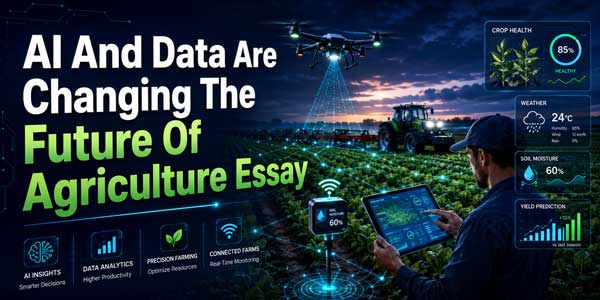
The adoption of AI in agriculture will be limited by several factors, including the cost of implementation and access to reliable internet connections, especially in developing countries. Similarly, AI may not be widely adopted due to a lack of appropriate skills and concerns regarding data security. Additionally, data exchange and compatibility between various systems may also limit the use of these technologies.
Therefore, it is essential to consider farmers’ needs when promoting the use of AI and data in agriculture. For instance, farmers should be encouraged to acquire knowledge about these technologies to maximize their benefits. Moreover, those who cannot afford these solutions due to financial constraints or lack of access to the necessary infrastructure should be supported.
How to Prepare for a Future in Digital Farming?
Not all farmers wish to embrace all the latest technologies. Nevertheless, all farmers need to understand the emerging technologies and how they may affect their operations. Therefore, farmers can begin by adopting a few digital solutions and gradually incorporate more advanced technologies as they gain confidence and experience. For instance, farmers may start by using a smart irrigation system or drones to monitor their fields.
Moreover, farmers should take the time to learn how to maximize the benefits of the technologies they adopt. Farmers’ intuition and experience will continue to play a critical role in agriculture despite the growing reliance on technology. Thus, farmers need to acquire knowledge on how to use these technologies to improve their operations.
A Look Into the Future: How AI Will Influence Farming:
In the future, AI and data will be essential components of every successful farm. Machinery will be interconnected and share data to make decisions, and sensors will collect and provide data on every aspect of the farm. Moreover, AI will play a critical role in supporting farmers’ initiatives aimed at maximizing yield and profit. While some tasks, such as operating machinery, may become automated, technology will always require human intervention. Therefore, the most successful farms will have informed farmers who are also skilled in using modern technology.
The most successful technologies will employ the most practical applications of AI, making the lives of farmers easier.
FAQ:
What is the role of AI in agriculture?
AI can be used in agriculture to analyze farm data and make informed recommendations that help farmers make the best choices while maximizing production and minimizing waste.
How does data help farmers make better decisions?
Data makes it possible for farmers to make better-informed decisions. For instance, data can help farmers decide when and where to water their farms.
Can AI help increase crop yields?
AI can help increase crop yields if it is used in conjunction with data.
Will AI take over farmers’ work?
While AI will support farmers and complete some tasks, such as operating machinery, it will not replace farmers’ expertise and decision-making.
What is the difference between AI and precision agriculture?
Precision agriculture uses technology and data to support decision-making in farming, while AI is used to make decisions in various aspects of human life.
Final Thoughts:
While AI and data will not solve all of agriculture’s problems, they will profoundly influence farms in the future. They will help farmers maximize production while conserving resources and responding to the challenges that affect their businesses. A combination of traditional and modern approaches to farming will be most effective in addressing current issues. Farmers who invest in these technologies and add them to their skill set will be the most successful in the future.
 About the Author:
Nitesh Singh, A Professional Content Writer specializing in SEO-friendly content across AI, Technology, Health, Agriculture, Tractors, Digital Marketing, and Lifestyle. He creates original, well-researched articles that inform readers and help businesses grow their online presence.













Be the first to write a comment.