
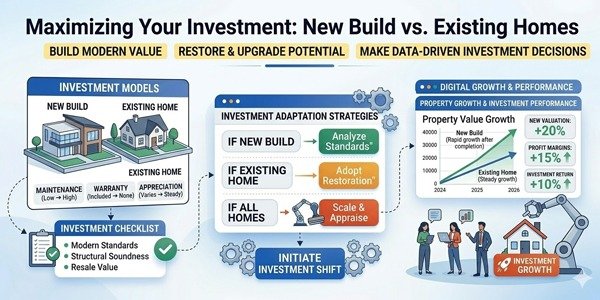
The first major decision that prospective homeowners must make during their property purchasing process involves deciding between new construction homes and preexisting properties. Your selection process will determine which financial benefits and lifestyle advantages you will receive throughout your life. The Process Of Making A Decision Requires You To Understand These Two Options Because They Will Help You Achieve Maximum Investment Returns.
Table of Contents
Understanding the Basics:
A new build home refers to properties that are recently constructed and have never been occupied. The homes feature modern amenities together with energy-efficient systems and contemporary layouts, which display current housing trends. Existing homes, which people also call resale homes, consist of properties that have been previously owned and maintain their original architectural features, from established communities to recently updated homes.
Financial Considerations:
Initial Costs:
New construction homes cost more than existing homes which have the same size. Developers price these homes to cover construction costs, land acquisition, and profit margins, which can make them initially more expensive. Existing homes, while potentially less costly upfront, may require additional spending on repairs, upgrades, or modernizations to meet contemporary standards.
Long-Term Investment:
Both existing homes and newly constructed properties present investment opportunities that can increase their value over time. New builds can attract buyers seeking modern design and low maintenance, which may sustain property value over time. Some people believe that the first premium that buyers pay for new construction homes will decrease their immediate investment returns, but buying older houses at below market prices and making smart upgrades will result in better investment outcomes. Existing homes provide buyers with the opportunity to increase property value through renovation projects and property upgrades. Homeowners who invest in energy-efficient upgrades, landscaping, and interior renovations will create more competitive resale value for their older home. Homeowners who follow this strategy will build substantial equity over time, particularly in established neighborhoods where demand remains high.
Maintenance and Renovation:
New build homes provide their first benefit through their requirement for minimal upkeep. Buyers need to spend less money on repairs because all home components are brand new. The first few years of a warranty period provide home buyers protection for both structural components and major building systems. The current state of plumbing systems, electrical systems, and appliances makes emergency repair costs less likely to occur.
The process of maintaining existing homes demands more work than maintaining new homes. Homeowners must fix or replace their building components, which include both roof systems and foundation elements. The property presents a disadvantage through its requirement of buyers to perform custom work according to their preferences. Homeowners who choose to renovate their homes will create personalized living spaces, which will boost their home value.
Energy Efficiency and Sustainability:
Modern building standards now emphasize energy efficiency and environmental sustainability, which creates a competitive advantage for newly constructed buildings. The combination of double-glazed windows, high-efficiency heating systems, and insulation standards enables buildings to decrease both their energy expenses and their environmental footprint. Buyers who want to minimize their future energy costs and carbon emissions will find these features valuable.
Building owners can choose to retrofit their properties with modern energy-efficient technologies. The installation of solar panels, energy-efficient appliances, and enhanced insulation will result in both environmental benefits and financial savings for businesses. Homeowners can use this investment to select the home upgrades that best fit their financial capacity and personal requirements.
Location and Community:
Current homes find their placement within established neighborhoods, which contain developed infrastructure, educational facilities, and public services. These areas possess community ties that exist together with their developed landscaping and their accessible public facilities. Existing homes provide families and buyers who want active neighborhoods with efficient transportation links because of their better location.
New build developments, in contrast, are frequently located on the outskirts of cities or in newly zoned areas. The two locations provide modern architectural designs together with planned community developments, yet they lack the distinctive character and operational benefits found in established residential areas. New developments typically provide shared facilities, which include parks and walking paths, and shopping areas that create spaces for residents to connect from their initial development stage.
Customization and Personalization:
Homeowners who choose to build new homes gain exclusive access to design their residential spaces according to their preferences. During the construction process, developers give buyers the ability to choose from different building materials and interior design options, and additional construction elements. The combination of personal design elements with home features enables buyers to create their preferred living environment without needing to conduct major home renovations after buying the property.
Homeowners can start customizing their properties immediately with existing homes because they offer immediate changes. Through renovations, buyers can showcase their unique style while enhancing their home functionality, which can lead to an increase in property value. The process of property restoration or modernization brings people personal satisfaction together with financial success, which existing home owners experience differently from people who own new constructions.

Market Resilience and Risk:
The choice between purchasing new homes versus existing properties depends on how market conditions develop. The construction industry experiences its peak periods when new building projects encounter challenges because developers must pay high costs while there are many available units in specific markets. Existing homes in locations with low housing supply experience faster price growth because buyers tend to compete for homes that offer both attractive locations and established value.
The construction of new buildings brings dangers which stem from the developer’s business reputation and the standard of their building work. The project faces risks that arise from incomplete work and building faults, and conflicts about the final touches. The assessment of developer companies through complete research and property examination should become standard operating procedure because it protects against potential losses.
Making the Right Choice:
The determination of whether to buy a new construction home or an existing property depends on three factors, which include personal preferences, funding methods, and chosen ways of living. The new construction market attracts buyers who want current technological features and simple upkeep, and energy-saving solutions. Existing homes attract buyers who want to experience authentic neighborhood character while they explore their options for home improvement.
The long-term financial outcomes need consideration. Buyers who want to maximize their investment should research local market conditions, property value growth, and future renovation expenses. A partnership with real estate experts, combined with comprehensive property assessments will help clients make decisions that meet their personal requirements and financial objectives.
Conclusion:
New builds and existing homes both provide separate benefits that create equal value between the two choices. New constructions deliver contemporary amenities and require less upkeep while allowing customers to personalize their homes. Existing homes contain unique architectural elements and established neighborhood environments, and potential for future improvements. The strategic home selection process starts when buyers assess the combined effects of their budget and property location and their personal needs on future home value.
The key to achieving your desired property needs through homeownership lies in your ability to make educated choices about contemporary features, future financial returns, and the historic character of established districts. The process of maximizing your investment requires you to balance three factors, which include your financial needs, your personal preferences, and your knowledge about how market trends affect property value over time.
 About the Author:
I am Ellis Newton. New Build Properties for Sale is part of Allison Homes, providing expert insights on property investment, home buying, and the latest trends in new build developments across the UK.













Be the first to write a comment.