
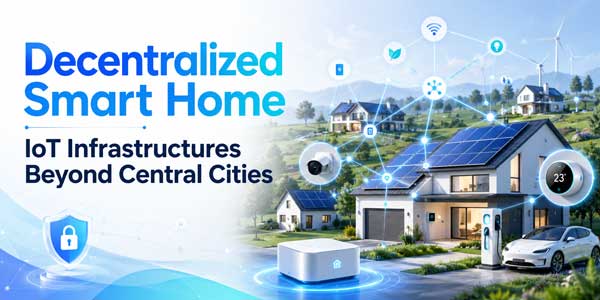
The dream of the smart home used to mean a cramped, inner-city apartment hooked up to a massive central cloud network. But times are changing. People across the globe are swapping crowded city centers for the breathing room of outer suburbs and regional towns, sparking a quiet tech revolution. Today, regional smart homes are paving the way by building their own resilient ecosystems entirely independent of central city grids.
Table of Contents
The Power Of Localized Processing:
So, how exactly does a decentralized IoT setup work when you pull it away from the big city grids? Instead of relying on a massive, distant data center to process every single command, suburban and regional smart homes are transforming into completely self-contained hubs of efficiency. It’s all about keeping things local, and this movement relies heavily on edge computing.
Traditional smart gadgets have to send data all the way to a central cloud server just to turn on a light. If your internet connection drops, your house basically goes blind. Edge computing changes the game by processing data locally right inside your home hub. Your security cameras, automated blinds, and smart locks keep chatting with each other flawlessly, even if the main neighborhood network takes an unexpected nap.
Finding Your Footing In The Suburbs:
This decentralization shift is particularly exciting when you look at Western Australia, for example, where people are prioritizing lifestyle and community over high-rise living.
In charming areas like this, the modern smart home offers indoor convenience, plus it helps merge classic suburban charm with autonomous technology that keeps a household running smoothly no matter what happens to the wider city infrastructure. Moving past the urban sprawl allows homeowners to establish tech setups that are deeply integrated with the local environment.
Managing Energy Smart:
The real magic happens when smart tech meets renewable energy. Modern suburban setups nowadays use intelligent software that acts as a personal grid manager. This localized approach protects the home from regional blackouts and unexpected network failures.
The system continuously checks local weather forecasts, tracks your daily usage patterns, and decides exactly when to save power in your battery, when to use it, or when to sell it back to the grid for a bit of extra cash. It creates a completely independent power loop that keeps the home running sustainably without needing a constant lifeline from the central city.
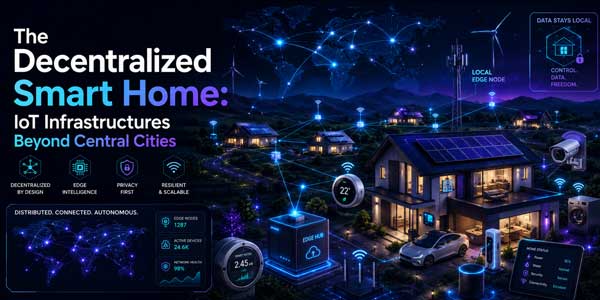
Maximizing On-Site Resource Efficiency:
Smart infrastructure helps regional and suburban homes manage water and waste much more responsibly, which is crucial when you are living further away from major municipal systems.
We are talking about automated greywater systems that know exactly when to water native gardens based on soil moisture sensors, and intelligent climate monitors that adjust shading to minimize air conditioning. By using IoT to track and optimize local environmental data, these homes reduce their footprint while maximizing what they have right on their own property.
Upgrading With Hidden Tech:
One of the coolest challenges of setting up advanced IoT networks outside central cities is dealing with local architecture. Upgrading historic Australian properties, for instance, such as classic Federation homes or weatherboard cottages, requires a gentle touch. You can’t just tear down heritage brick walls to run miles of data cables.
Luckily, modern decentralized tech solves this using ultra-reliable, low-power wireless mesh networks and non-invasive sensors. This allows homeowners to completely preserve their property’s timeless, character-rich aesthetic appeal on the outside, while quietly layering in cutting-edge security, smart lighting, and automated climate control right behind the scenes.
Connecting Neighborhoods:
The benefits get even bigger when multiple smart homes in the same neighborhood start connecting. Imagine a cluster of homes with smart solar batteries that can securely talk to each other.
If your neighbor is away on vacation and their panels are generating tons of excess energy, their smart hub can automatically share that power with your house so you can charge your electric vehicle overnight. This localized sharing takes pressure off the state’s main energy grid, drives down electricity bills for everyone on the block, and creates an incredible layer of community backup during wild weather or unexpected blackouts.
The Future Standard For Modern Living:
Lastly, heading away from the crowded city center doesn’t mean you have to give up on top-tier technological sophistication. No, on the contrary, you would be embracing local edge computing, smart energy management, and wireless mesh networks, suburban and regional homes to actually set the gold standard for the next generation of modern living. The future of smart tech would signalize being locked away in a downtown skyscraper, but rather thriving right out here in our local neighborhoods.
 About the Author:
Callum Hewitt is a tech-savvy real estate writer and data analyst who leverages modern property-tech tools to track the Western Australian housing market. He specializes in using data-driven insights to uncover hidden suburban gems, helping buyers find a gorgeous house for sale in Bassendean.













Be the first to write a comment.