
Search engines have changed dramatically over the past few years. Ranking on Google is no longer about inserting keywords into every paragraph or building hundreds of backlinks overnight. In 2026, search engines evaluate websites based on user experience, content quality, authority, technical performance, and how well pages answer real search intent.
Businesses that understand these changes continue to gain visibility, while those relying on outdated SEO techniques slowly disappear from search results. Whether you’re a startup, an established business, or a marketer looking to stay ahead, implementing modern SEO strategies can make the difference between page one and page ten.
Many businesses now collaborate with experienced SEO services in Bangalore because the city has become a major hub for digital innovation, technical expertise, and performance-driven search marketing. Regardless of where your business operates, understanding these proven strategies will help you build sustainable organic growth throughout 2026 and beyond.
Table of Contents
Why SEO Matters More Than Ever in 2026?
Consumers begin almost every buying journey with a search engine. Whether someone wants to compare products, find a nearby service, or learn something new, Google remains the first destination.
At the same time, competition has intensified. Every industry is producing more content than ever before. Search engines have responded by prioritizing websites that consistently demonstrate expertise, trustworthiness, and relevance instead of rewarding those that simply publish large quantities of content.
Modern search engine optimization focuses on creating genuine value for users while maintaining excellent technical performance behind the scenes.
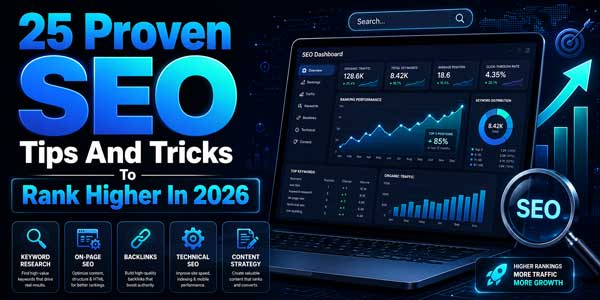
25 Proven SEO Tips and Tricks That Actually Work:
1.) Understand Search Intent Before Writing:
Every successful SEO campaign starts by understanding why users perform a search. Are they looking for information, comparing products, or ready to make a purchase? Your content should directly satisfy that intent.
2.) Focus on Topical Authority:
Publishing one excellent article isn’t enough anymore. Build multiple interconnected articles around a subject to establish expertise and become a trusted resource.
3.) Write for Humans First:
Natural, engaging content consistently performs better than keyword-stuffed pages. Make every paragraph useful, conversational, and easy to understand.
4.) Optimize Core Web Vitals:
Fast-loading websites reduce bounce rates and improve user satisfaction. Compress images, minimize unnecessary scripts, and improve server response times.
5.) Create Helpful, Comprehensive Content:
Instead of publishing several short articles, produce in-depth resources that answer every important question users may have.
6.) Update Existing Content Regularly:
Refreshing older articles with current statistics, examples, and updated information signals freshness to search engines.
7.) Improve Internal Linking:
Strategically connecting related pages helps both visitors and search engines discover valuable content across your website.
8.) Optimize Images:
Use descriptive filenames, compressed formats, and meaningful alt text to improve accessibility and image search visibility.
9.) Target Long-Tail Keywords:
Specific search queries generally have lower competition and higher conversion potential compared to broad keywords.
10.) Build High-Quality Backlinks:
Focus on earning links from reputable industry websites rather than purchasing low-quality backlinks.
11.) Improve Mobile Experience:
Most searches now happen on smartphones. Responsive design and intuitive navigation have become essential ranking factors.
12.) Use Structured Data:
Schema markup helps search engines understand your content and increases opportunities for rich search results.
13.) Optimize Meta Titles and Descriptions:
Compelling titles and descriptions improve click-through rates while helping search engines understand page relevance.
14.) Reduce Duplicate Content:
Every page should provide unique value. Duplicate pages confuse search engines and dilute ranking potential.
15.) Improve Website Security:
HTTPS remains an essential trust signal for both search engines and visitors.
16.) Strengthen Local SEO:
Businesses serving specific cities should optimize Google Business Profile listings, local citations, and location-specific content.
17.) Publish Original Research:
Unique insights, surveys, and industry reports naturally attract backlinks and establish authority.
18.) Answer Frequently Asked Questions:
Well-structured FAQ sections improve user experience and increase visibility for conversational searches.
19.) Monitor User Engagement:
Metrics like dwell time, click-through rate, and bounce rate provide valuable insights into content effectiveness.
20.) Optimize for Voice Search:
Use conversational language that mirrors how people naturally ask questions using voice assistants.
21.) Build Brand Authority:
Strong brands earn more searches, backlinks, and trust from both users and search engines.
22.) Improve Crawl Efficiency:
Clean website architecture ensures search engine bots can easily discover and index important pages.
23.) Focus on Content Experience:
Readable typography, logical formatting, engaging visuals, and clear navigation keep users engaged longer.
24. Track SEO Performance Continuously:
Use analytics platforms to monitor rankings, traffic, user behavior, and conversion metrics before making strategic decisions.
25.) Stay Updated with Google’s Algorithm Changes:
SEO is constantly evolving. Businesses that continuously adapt outperform competitors relying on outdated strategies.
Common SEO Mistakes Businesses Still Make:
Despite the availability of countless SEO resources, many businesses continue making avoidable mistakes that limit their search visibility.
Publishing AI-generated content without proper editing, ignoring technical SEO issues, neglecting internal linking, targeting overly competitive keywords, and creating pages solely for search engines instead of users remain among the most common challenges.
Another frequent mistake is expecting immediate results. SEO is a long-term investment that requires consistent optimization, quality content, and continuous monitoring. Businesses that remain patient generally experience sustainable growth rather than temporary ranking spikes.
Why Businesses Choose Professional SEO Experts?
Implementing SEO effectively requires expertise across multiple disciplines, including technical optimization, content strategy, analytics, UX, website development, and link acquisition.
This is why many growing businesses partner with an experienced SEO agency. These agencies combine technical knowledge with market research, content planning, competitor analysis, and performance tracking to build long-term organic visibility.
Similarly, working with an established SEO company in Bangalore provides access to specialists who understand evolving search algorithms and can create customized optimization strategies based on business objectives instead of generic SEO checklists.
What Modern Search Engine Optimization Includes?
Today’s SEO extends far beyond keyword optimization. Comprehensive search engine optimization services typically include technical SEO audits, website architecture improvements, content strategy, local SEO, mobile optimization, backlink development, schema implementation, performance monitoring, and continuous reporting.
Businesses looking for scalable growth often choose an experienced search engine optimization company because these providers bring together developers, content strategists, SEO analysts, and digital marketers under one roof to execute integrated optimization campaigns.
The result is a stronger online presence that attracts qualified visitors while building long-term credibility in competitive industries.
The Future of SEO in 2026 and Beyond:
Artificial intelligence has transformed how search engines understand content, but one principle remains unchanged: websites that genuinely help users continue to perform well.
Future SEO success will depend on creating authentic experiences rather than manipulating algorithms. Search engines increasingly evaluate expertise, topical authority, user satisfaction, and content usefulness before determining rankings.
Businesses that invest in high-quality content, excellent website performance, and continuous optimization will remain competitive regardless of future algorithm updates.
Conclusion:
SEO in 2026 is no longer about chasing shortcuts. Sustainable rankings come from understanding your audience, producing valuable content, maintaining technical excellence, and consistently improving the overall user experience.
The 25 strategies discussed above provide a practical roadmap for businesses looking to strengthen their online visibility and compete effectively in today’s search landscape. Whether you manage SEO internally or collaborate with professional SEO services, focusing on long-term value rather than quick wins will deliver lasting results.
As search engines continue to evolve, the businesses that prioritize quality, credibility, and user satisfaction will be the ones that achieve higher rankings and sustainable organic growth.
 About the Author:












Be the first to write a comment.