
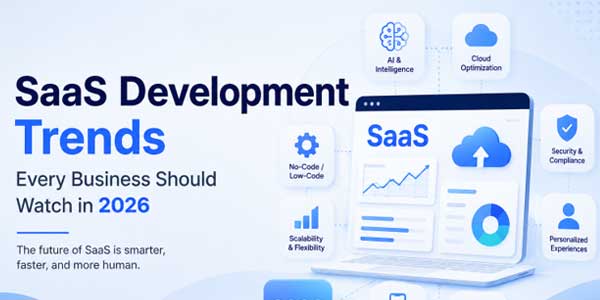
People keep saying SaaS is done changing. It isn’t. 2026 keeps proving that wrong.
Pricing is shifting. AI isn’t a side feature anymore; it’s running the actual product in a lot of cases now. Customers want more than they did two years back, and faster too.
Skip these shifts and your product can feel old the day it launches. People jump ship fast once a competitor solves the same problem quicker.
Here’s what’s actually changing right now. Not guesses dressed up as predictions. Each trend below comes with a reason attached, so you can decide if it even applies to you.
Table of Contents
Why 2026 Feels Like a Real Turning Point?
SaaS stopped being new a while back. Most companies run five, ten, sometimes way more tools daily without thinking twice about it.
That familiarity quietly raised expectations. Nobody’s impressed by “it’s in the cloud” anymore. People compare a new tool against whatever’s already their favorite. Average tools lose that fight almost every time.
A few things are driving most of this. AI keeps getting more capable, genuinely. Budgets are tighter, so pricing has to work harder for the same dollar. And people expect faster, more personal service than they used to, full stop.
Trend 1: AI Woven Into the Core Product
Chatbot widgets glued onto old dashboards don’t impress anyone. People spot the difference between a real AI feature and a marketing add-on fast now.
What’s actually shifting: AI runs inside the core workflow from the start, not stapled on later. Automated data entry. Predictive alerts before something breaks. AI drafting a full report instead of answering one question about it.
A logistics platform predicting a shipping delay before it happens beats reporting it after the truck’s already late. One helps you plan. The other just tells you about a problem you’re already stuck with.
Trend 2: Usage-Based Pricing Keeps Gaining Ground
Flat monthly plans aren’t dead. They’re losing ground fast, though, especially for infrastructure and API-heavy products.
Usage-based pricing ties the bill to actual value delivered. Someone running 10,000 API calls a month and someone running 10 million shouldn’t pay the same amount. Usage pricing fixes that.
A few patterns keep showing up. Flat subscriptions haven’t vanished, but keep shrinking for API-heavy products specifically. Usage-based billing grows fastest in developer tools. Hybrid setups, a base fee plus overage, are becoming standard for mid-market SaaS. Freemium with paid tiers on top still works fine when the product needs to sell itself.
Engineering carries the weight of this shift. Real-time, accurate metering is genuinely hard, and plenty of teams don’t realize how hard until they’re already mid-build.
Trend 3: Vertical SaaS Keeps Eating Horizontal SaaS’s Lunch
Generic software built for everyone keeps losing ground to tools built for one industry. Healthcare, legal, and logistics SaaS are all outgrowing broad, general-purpose tools right now.
Not much mystery here. A vertical tool already speaks the industry’s language. It already knows the compliance rules. It already fits how that industry actually works day to day.
A dental practice management tool usually beats a generic CRM for a dental office, mostly because it already understands what that office deals with. Founders building in this space often bring in a saas application development company that’s shipped something similar before, instead of starting cold.
Trend 4: Composable and Headless Architecture Goes Mainstream
Rigid, all-in-one platforms don’t have the pull they used to. Businesses want pieces that actually fit, not a bundle full of stuff they’ll never touch.
Composable architecture splits a product into independent parts. A headless CMS here. A separate billing engine there. A customizable front end tying it all together through APIs. Pick what fits, skip the rest.
This isn’t conference-talk buzz either. Companies really are ripping out old monolithic e-commerce platforms, rebuilding on composable stacks so they move faster and customize deeper. Costs more upfront. Usually pays off later.
Trend 5: AI Agents Start Taking Real Actions
Chatbots answer questions. Agents actually do the task. That’s basically the whole story of 2026 in one sentence.
Picture an AI agent inside a SaaS product rescheduling a delayed shipment on its own, instead of just pinging someone that it’s running late. It acts, then tells you what it did afterward.
That raises messy questions nobody’s fully settled on. Who owns it when the agent screws something up? Products shipping agent features this year need guardrails, logging, and a way to roll things back. Built in from day one. Not bolted on after something breaks.
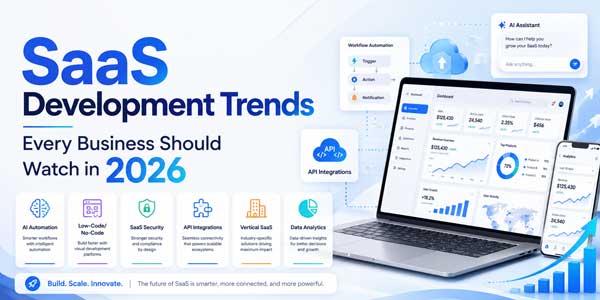
Trend 6: Security and Compliance Move Earlier in the Process
Security used to show up right before some big enterprise buyer demanded a SOC 2 report. That habit is falling apart now.
Mid-market and enterprise buyers ask about security on the first sales call these days, not three months into a negotiation. A weak answer there can kill a deal before it even starts.
A few things count as baseline now, not selling points:
- Encryption at rest and in transit, assumed rather than advertised
- SOC 2 or ISO 27001 readiness planned into the earliest architecture decisions
- Role-based access control shipped in the core product, not sold separately
- Third-party security audits done regularly, documentation ready when someone asks
A solid software development company usually builds this in from day one. Bolting security onto live infrastructure later is slow, expensive, and honestly kind of painful.
Trend 7: Product-Led Growth Keeps Maturing
Free trials and self-serve signups aren’t new. What changed is how much smarter the systems behind them got.
Mature product-led growth leans on in-product prompts, usage-based upgrade nudges, and behavior data. Users talk themselves into a paid plan without ever getting on a sales call. The product does most of the convincing now.
A project management tool might nudge a team to upgrade only once they actually hit a storage limit. Not some generic banner shoved in their face. That timing usually matters more than whatever the banner says.
Trend 8: Smaller, Focused Tools Replace Bloated Suites
Big all-in-one platforms once promised to replace ten tools with one. A lot of companies are quietly backing off that idea in 2026.
Teams want a handful of tools now, each good at one thing, wired together through APIs. Not one suite trying to do everything at once. The suite usually ends up fine at five things and great at none of them.
This ties back to composable architecture directly. Smaller tools are just easier to swap out when something better shows up. That flexibility matters more to buyers than it did a few years back.
2023 vs 2026: How Much Has Actually Changed?
Put the two years side by side, and the gap looks bigger than it feels living through one release cycle at a time.
Back in 2023, AI usually meant a chatbot bolted onto a dashboard somewhere. Now it’s built into core workflows. Pricing leaned almost entirely on flat tiers back then. Usage-based and hybrid models have real market share now. Architecture ran mostly monolithic and all-in-one. Composable, API-first setups are common today. Security got handled right before a deal closed. Now it starts at the first architecture decision. Growth leaned on sales teams even for mid-market accounts. Product-led motion covers most deal sizes now.
None of that gap is small. Something built the 2023 way in 2026 is going to feel behind next to whatever a buyer’s comparing it against.
A Quick Example Worth Noting:
A mid-size fintech company reworked its onboarding flow in early 2026. An AI agent fills out compliance paperwork straight from uploaded documents now. Onboarding used to eat up three full days per customer.
The AI-assisted version got that down to under four hours in most cases. Complaints about onboarding friction fell by more than half within a quarter.
They didn’t do this alone. The company brought in an outside Saas app development company with fintech experience already, since compliance-heavy AI work carries real regulatory risk if it’s handled carelessly.
That partnership paid off again once the compliance audit rolled around after launch. The outside team had sat through similar audits before. They already knew roughly what documentation regulators would ask for.
What This Means for Choosing a Development Partner?
Keeping up with all this takes real technical depth. Most internal teams just don’t have room to chase every trend at once.
That’s usually where the right outside team earns its keep. A capable saas development agency brings pattern recognition from other products that already went through these same shifts. That cuts the learning curve down quite a bit.
Look for a partner who can talk specifically about usage-based billing, composable architecture, and responsible AI agent design. Not vague development experience. Ask for actual examples, not a services list copied off their website.
Software development services differ a lot in how deep they actually go. Plenty of teams can ship a decent CRUD app fine but have never touched usage-based metering or headless architecture. That gap shows up fast once real customers hit scale.
Mistakes Businesses Make Chasing These Trends:
Nobody needs to chase every single trend here. Grab all of them at once, and it usually backfires.
- Bolting AI onto the product just so it can say it “has AI,” even when nobody asked for it
- Moving to usage-based pricing before the metering behind it actually works right
- Rebuilding for composability before product-market fit is settled
- Shipping AI agents without logging, without rollback, without anyone clearly owning what happens if things break
- Copying a competitor’s pricing model and never checking if it fits your own customers
None of these look bad in isolation. Stack three or four of them, though, and a team usually spent months chasing trends instead of fixing what customers already complained about.
Getting Ready for What’s Next:
You don’t need all eight of these at once. Try that, and you end up with a half-finished mess instead of any real progress.
Look honestly at where the product’s already behind. Pricing might be stuck on flat tiers while usage-based models eat into your category. Security might still get handled after something breaks instead of being designed up front.
Pick one, maybe two trends with the clearest upside for revenue or retention. A vertical SaaS company probably leans toward domain-specific AI first. An infrastructure product probably chases usage-based billing before anything else.
Talk to real customers before sinking engineering time into any of it. This list shows what’s possible out there, nothing more. It’s not a checklist your product has to finish.
SaaS in 2026 rewards whoever changes on purpose, not whoever’s sprinting after the newest headline. Companies paying attention now are likely to be setting the pace by 2027, instead of playing catch-up.
 About the Author:
Emily is a content writer specializing in mobile apps and software development. With a keen interest in educating others, she crafts insightful content on mobile, software, and web development. His passion for writing helps keep readers informed about the latest trends in the tech industry. Hoping to provide valuable and engaging content for the readers.













Be the first to write a comment.