
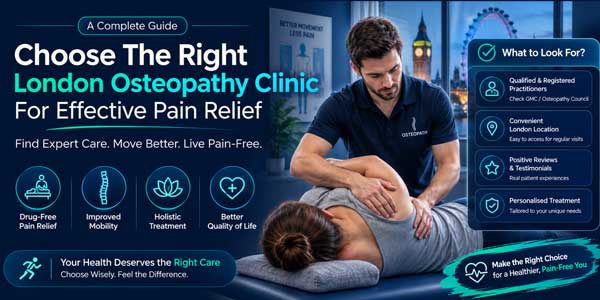
Living with persistent back pain, neck stiffness, sports injuries, or joint discomfort can significantly affect your daily life. Whether you’re struggling with long hours at a desk, recovering from an injury, or experiencing chronic musculoskeletal pain, finding the right healthcare professional is the first step toward lasting relief.
With numerous clinics offering London Osteopathy services, choosing the right one can feel overwhelming. Not every clinic provides the same level of expertise, personalised care, or treatment approach. Selecting a qualified osteopath isn’t just about convenience—it’s about ensuring you receive safe, evidence-informed care tailored to your specific needs.
In this guide, we’ll explain what to look for in a London osteopathy clinic, the key qualities of an experienced osteopath, and how to make an informed decision that supports your long-term health and wellbeing.
Table of Contents
What Is Osteopathy?
Osteopathy is a hands-on healthcare approach that focuses on diagnosing, treating, and preventing musculoskeletal conditions. Rather than treating only the symptoms, osteopaths assess how the muscles, joints, ligaments, tendons, and spine work together to identify the underlying cause of pain or restricted movement.
Treatment may include:
- Soft tissue massage
- Joint mobilisation
- Spinal manipulation (where appropriate)
- Stretching techniques
- Rehabilitation exercises
- Postural advice
- Lifestyle recommendations
Osteopathy can help people of different ages and activity levels, from office workers and parents to athletes and older adults looking to improve mobility and reduce pain.
Why Choosing the Right London Osteopathy Clinic Matters?
The quality of care you receive can have a significant impact on your recovery. An experienced clinic will do more than provide temporary pain relief—it will identify contributing factors, create a personalised treatment plan, and help reduce the likelihood of recurring problems.
A reputable clinic also focuses on patient education, helping you understand why your symptoms developed and what you can do to support long-term recovery through movement, posture, and healthy lifestyle habits.
1.) Check Professional Qualifications and Registration:
One of the most important factors when choosing a London osteopathy clinic is ensuring that your osteopath is fully qualified and professionally registered.
In the UK, practising osteopaths must be registered with the General Osteopathic Council (GOsC). Registration confirms that the practitioner has completed approved education, meets professional standards, and follows strict ethical guidelines.
When researching clinics, look for information about:
- Professional qualifications
- GOsC registration
- Years of clinical experience
- Areas of specialist interest
- Ongoing professional development
Qualified practitioners are committed to maintaining high clinical standards and keeping their knowledge up to date through continued education.
2.) Look for Experience Treating Your Condition:
Every patient is different, and not every clinic specialises in the same conditions.
Some osteopaths focus on sports injuries, while others have extensive experience helping people with office-related posture problems, pregnancy-related discomfort, or age-related joint pain.
Common conditions treated include:
- Lower back pain
- Neck pain
- Shoulder pain
- Hip pain
- Knee pain
- Sciatica
- Headaches related to muscle tension
- Sports injuries
- Repetitive strain injuries
- Poor posture
- Joint stiffness
Choosing a clinic with experience in your specific condition often leads to a more personalised assessment and treatment plan.
3.) Choose a Clinic That Offers Personalised Treatment:
No two patients experience pain in the same way.
An excellent osteopathy clinic avoids a “one-size-fits-all” approach. Instead, your first appointment should include a detailed consultation covering your medical history, daily activities, lifestyle, symptoms, and treatment goals.
A personalised treatment plan may include:
- Hands-on osteopathic treatment
- Mobility exercises
- Strengthening programmes
- Clinical Pilates recommendations
- Ergonomic advice
- Home exercise plans
- Injury prevention strategies
The aim is not only to relieve current symptoms but also to improve long-term function and reduce the risk of future problems.
4.) Consider Clinics That Provide a Holistic Approach:
Modern osteopathy recognises that pain is rarely caused by a single factor.
For example, recurring neck pain may be linked to:
- Poor workstation setup
- Stress-related muscle tension
- Reduced mobility
- Weak supporting muscles
- Previous injuries
- Poor sleeping posture
A holistic clinic considers your entire body rather than focusing only on the painful area.
Many leading London osteopathy clinics also combine treatment with rehabilitation programmes, movement education, and Clinical Pilates to improve long-term outcomes.
5.) Read Genuine Patient Reviews:
Patient reviews provide valuable insight into what you can expect from a clinic.
Look beyond star ratings and pay attention to comments about:
- Professionalism
- Communication
- Thorough assessments
- Treatment effectiveness
- Friendly staff
- Appointment experience
- Clinic environment
- Long-term improvements
Consistently positive reviews often indicate a clinic that values patient care and delivers high-quality treatment.
While no clinic can guarantee results for every patient, honest feedback can help you make a more informed decision.
6.) Evaluate the Initial Consultation Process:
A quality osteopathy clinic doesn’t rush your first appointment.
Instead, the osteopath should take time to understand your symptoms, assess your movement, explain their findings clearly, and discuss suitable treatment options.
A comprehensive consultation typically includes:
- Discussion of your medical history
- Review of symptoms
- Postural assessment
- Movement testing
- Joint examination
- Muscle assessment
- Explanation of diagnosis
- Personalised treatment recommendations
You should leave your first appointment with a clear understanding of your condition and the next steps in your recovery plan.
7.) Look for Evidence-Based Treatment:
Effective osteopathy combines clinical experience with current evidence and patient-centred care.
Rather than relying on a single technique, experienced practitioners adapt treatment based on your condition, comfort level, and progress.
Treatment may evolve as your symptoms improve, ensuring that care remains focused on helping you regain strength, flexibility, and confidence in your movement.
A clinic that values evidence-based practice will also explain why specific techniques are recommended and encourage questions throughout your treatment journey.

8.) Consider Additional Services That Support Recovery:
Many modern clinics offer complementary services that enhance the effectiveness of osteopathic care.
Depending on your needs, these may include:
- Clinical Pilates
- Sports massage
- Exercise rehabilitation
- Postural assessments
- Workplace ergonomics advice
- Injury prevention programmes
- Strength and mobility training
These services can play an important role in maintaining the benefits of treatment and supporting long-term musculoskeletal health.
9.) Consider the Clinic’s Location and Accessibility:
Convenience plays an important role in your treatment journey, especially if multiple appointments are recommended. Choosing a clinic that is easy to reach can help you stay consistent with your care plan.
When comparing clinics, consider:
- Easy access by public transport
- Nearby parking facilities
- Flexible appointment times
- Evening or weekend availability
- Comfortable and professional treatment rooms
- Online booking options
A convenient location makes it easier to attend appointments regularly, which can contribute to better long-term outcomes.
10.) Communication and Patient Care Matter:
A skilled osteopath should not only provide effective treatment but also communicate clearly and professionally.
During your consultation, you should feel comfortable asking questions about your condition, treatment options, expected recovery time, and home care advice.
Good communication helps build trust and ensures you understand:
- What is causing your symptoms
- How osteopathic treatment may help
- What to expect during treatment
- How many sessions may be appropriate
- Exercises that support recovery
- Lifestyle changes that may reduce future problems
A patient-centred approach encourages informed decision-making and active participation in your recovery.
11.) Ask the Right Questions Before Booking:
Before choosing a clinic, it can be helpful to ask a few questions to understand whether it is the right fit for your needs.
Some useful questions include:
- Is the osteopath registered with the General Osteopathic Council (GOsC)?
- What conditions do you commonly treat?
- What happens during the first consultation?
- Will I receive a personalised treatment plan?
- Do you provide rehabilitation exercises or Clinical Pilates?
- How long does each appointment last?
- How will my progress be monitored?
- What can I do at home to support my recovery?
A reputable clinic will be happy to answer these questions and explain its approach to patient care.
12.) Red Flags to Watch Out For:
While many osteopathy clinics provide excellent care, it is important to be aware of warning signs that may indicate lower standards of practice.
Be cautious if a clinic:
- Guarantees a cure for every condition
- Recommends unnecessary long-term treatment without explanation
- Provides little or no assessment before treatment
- Does not explain your diagnosis or treatment plan
- Lacks professional registration details
- Has consistently poor patient feedback
- Uses high-pressure sales tactics
Professional healthcare should always be transparent, ethical, and focused on your individual needs.
13.) Cost Should Not Be the Only Decision Factor:
It is natural to compare treatment costs, but choosing a clinic solely because it offers the lowest price may not always provide the best value.
Instead, consider the overall quality of care, including:
- Practitioner qualifications
- Clinical experience
- Comprehensive assessments
- Personalised treatment plans
- Patient education
- Rehabilitation support
- Ongoing progress reviews
Investing in high-quality care can often lead to more effective recovery and better long-term results.
14.) Why Choose London Osteopathy and Pilates?
When searching for trusted London Osteopathy services, choosing a clinic that combines clinical expertise with personalised care can make a meaningful difference to your recovery.
London Osteopathy and Pilates provides patient-focused care designed to help individuals improve mobility, reduce pain, and support long-term musculoskeletal health. Every treatment plan begins with a detailed assessment to understand your symptoms, lifestyle, and goals before recommending an approach tailored to your needs.
The clinic offers a combination of:
- Personalised osteopathy treatments
- Clinical Pilates programmes
- Rehabilitation exercises
- Postural assessments
- Movement education
- Long-term injury prevention strategies
Rather than focusing only on temporary symptom relief, the emphasis is on identifying contributing factors and helping patients move more comfortably and confidently.
Whether you’re experiencing back pain, neck discomfort, sports injuries, joint stiffness, or posture-related issues, a tailored treatment plan can support your recovery and help you return to everyday activities with greater ease.
Final Thoughts:
Finding the right osteopathy clinic is about more than simply booking the nearest appointment. It involves choosing experienced professionals who take the time to understand your condition, explain your treatment options, and provide ongoing support throughout your recovery.
By considering qualifications, experience, personalised care, patient reviews, communication, and rehabilitation services, you can make a confident and informed decision.
If you’re looking for professional London Osteopathy services that prioritise evidence-informed care, personalised treatment, and long-term wellbeing, selecting a trusted clinic can be an important step toward managing pain and improving your quality of life.
Remember that recovery is a journey, and the right healthcare team will work with you to develop a plan that supports both immediate relief and lasting results.
Frequently Asked Questions (FAQs):
1. What conditions can an osteopath treat?
Osteopaths commonly help manage musculoskeletal conditions such as back pain, neck pain, shoulder pain, sports injuries, joint stiffness, sciatica, posture-related discomfort, and muscle tension. Treatment is tailored to each individual’s symptoms and needs.
2. How do I know if a London osteopath is qualified?
In the UK, practising osteopaths must be registered with the General Osteopathic Council (GOsC). Checking a practitioner’s registration and professional qualifications is an important step before booking an appointment.
3. What happens during the first osteopathy appointment?
Your initial consultation usually includes a discussion about your medical history, a physical assessment, movement testing, and an explanation of your diagnosis. The osteopath will then recommend a personalised treatment plan based on your condition.
4. How many osteopathy sessions will I need?
The number of sessions varies depending on the nature and severity of your condition, your overall health, and your response to treatment. Your osteopath will review your progress and adjust your care plan as needed.
5. Is osteopathy suitable for sports injuries?
Yes. Osteopathy is commonly used to support recovery from sports-related injuries by improving joint mobility, reducing muscle tension, and promoting effective rehabilitation alongside appropriate exercise programmes.
6. Can osteopathy help improve posture?
Many people seek osteopathic care for posture-related discomfort. Treatment may include hands-on techniques, movement advice, strengthening exercises, and ergonomic recommendations to improve posture and reduce strain.
7. What should I wear to an osteopathy appointment?
Comfortable clothing that allows easy movement is generally recommended. Depending on the area being assessed, your osteopath may ask you to wear clothing that enables a clear examination while ensuring your comfort and privacy.
8. Why should I choose a clinic that also offers Clinical Pilates?
Combining osteopathy with Clinical Pilates can support rehabilitation by improving core strength, flexibility, posture, and movement control. For many patients, this integrated approach helps maintain treatment results and reduce the risk of recurring injuries.
 About the Author:
Elisa Bell from The editorial team at London Osteopathy and Pilates specialises in evidence-informed osteopathy, rehabilitation, Clinical Pilates, and musculoskeletal care. Their goal is to help people improve mobility, manage pain, and support long-term wellbeing through personalised treatment plans. Learn more at London Osteopathy and Pilates.













Be the first to write a comment.