
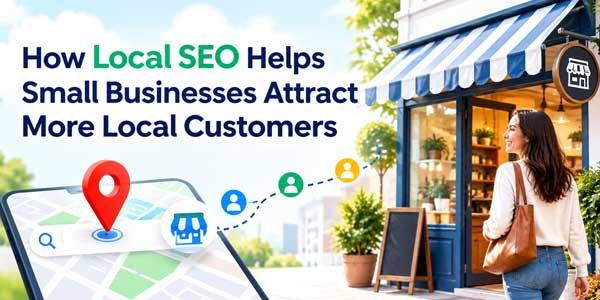
Local SEO helps small businesses become visible when nearby customers search for products, services, or places in their area. Instead of competing only for broad national keywords, a local business can target people who are much closer to taking action, such as calling, visiting, requesting directions, booking an appointment, or making a purchase.
For a restaurant, gym, clinic, salon, repair company, law firm, retail store, consultant, home-service provider, or any other location-based business, local search visibility can connect online discovery directly with real-world revenue.
Someone searching for “gym near me,” “best dentist in Karachi,” “AC repair near Gulshan,” or “Italian restaurant open now” usually has stronger commercial intent than someone casually reading a general article about those industries.
This is why local SEO deserves its own strategy.
The Core Local SEO Principle: Make It Extremely Easy For Search Engines And Customers To Understand What Your Business Does, Where It Operates, When It Is Available, Why It Is Trustworthy, And How A Local Customer Can Take The Next Step.
Modern local SEO combines Google Business Profile optimization, website SEO, local content, customer reviews, local links, business citations, accurate location information, mobile usability, structured data, and conversion optimization.
This guide explains how local SEO works in 2026, how Google evaluates local businesses, what small businesses should optimize first, which tactics can attract more local customers, and which common mistakes can reduce local visibility.
Table of Contents
What Is Local SEO?
Local SEO is the process of improving a business’s visibility for searches connected to a specific geographic area.
These searches can include an explicit location:
- Dentist In Karachi.
- Gym In Gulshan-E-Jamal.
- Plumber In Lahore.
- Accountant In Islamabad.
They can also contain no city name at all:
- Gym Near Me.
- Pizza Near Me.
- Car Repair Open Now.
- Best Salon Nearby.
Google can use the searcher’s location and the query itself to determine when local results are appropriate.
Local SEO therefore aims to strengthen visibility across:
- Google Search.
- Google Maps.
- Business Profiles.
- Local organic results.
- Location-based discovery experiences.
Why Local SEO Matters So Much For Small Businesses
Large national brands often have larger advertising budgets, stronger backlink profiles, and more marketing resources.
Local search creates a different competitive environment.
A small business can still compete effectively when it is:
- Highly relevant to the search.
- Close enough to the customer.
- Well-reviewed.
- Clearly represented online.
- Trusted within the local market.
This gives smaller businesses an opportunity to compete based on local relevance and reputation rather than only brand size.
How Google Determines Local Rankings
Google explains that local results are mainly influenced by three broad factors:
- Relevance.
- Distance.
- Prominence.
Understanding these three concepts provides a better local SEO strategy than chasing random tricks.
Relevance
Relevance measures how closely a business matches what the user is searching for.
A detailed Business Profile, appropriate business category, accurate services, relevant website pages, and clear business information can help Google understand what your company offers.
Distance
Distance considers how far a business is from the location connected with the search.
If a user searches for “coffee shop near me,” location matters.
You cannot realistically optimize your way around geography in every situation. A business five kilometers away may sometimes be more relevant or prominent, but distance remains part of the equation.
Prominence
Prominence is related to how well-known or established a business appears.
Google can consider information from across the web, including:
- Links.
- Articles.
- Directories.
- Review quantity.
- Review ratings.
- Organic search visibility.
This is why local SEO extends beyond the Google Business Profile itself.
Local SEO Connects High-Intent Customers With Your Business
Local searches are often close to conversion.
Consider the difference between:
“What Is Personal Training?”
and:
“Personal Trainer Near Me.”
The second user is much more likely to be searching for a provider.
Local visibility can therefore produce actions such as:
- Phone calls.
- Website visits.
- Direction requests.
- Bookings.
- Store visits.
- Messages.
- Orders.
This is one reason a smaller amount of highly relevant local traffic can be more valuable than a much larger amount of generic website traffic.
Claim And Verify Your Google Business Profile
For eligible local businesses, Google Business Profile is one of the most important components of local SEO.
Verification helps Google establish that an authorized representative manages the business information.
A properly managed profile can appear across Google Search and Maps.
Important Business Profile Information
- Business name.
- Primary category.
- Additional relevant categories.
- Address where applicable.
- Service area where applicable.
- Phone number.
- Website.
- Business hours.
- Services.
- Photos.
The objective is to make the profile complete enough that Google and potential customers clearly understand the business.
Use Your Real Business Name
One common local SEO mistake is adding keywords, city names, services, or promotional wording to the Business Profile name when those words are not part of the real-world business name.
For example, if the real business name is:
ABC Dental Clinic
do not artificially change it to:
ABC Dental Clinic Best Dentist Teeth Whitening Karachi Emergency Dental Services
Google Business Profile information should represent the business accurately.
Keyword stuffing a business name can create policy problems and makes the listing look less trustworthy.
Choose The Right Primary Business Category
The primary category helps Google understand the core nature of the business.
Choose the most specific category that accurately represents what the business actually is.
For example, a dedicated gym should generally choose the most appropriate fitness-related category rather than a vague category simply because it has broader search volume.
Additional categories can be added when they genuinely describe important parts of the business.
Do Not Treat Categories Like Keywords
Categories should describe the business.
They should not be selected merely because related search terms have high volume.
Accuracy improves both customer expectations and search relevance.
Complete Your Business Information Fully
Google states that businesses with complete and accurate information are more likely to appear for relevant local searches.
Fill in the important fields available for your business type.
Review:
- Business name.
- Category.
- Location.
- Service area.
- Website URL.
- Phone number.
- Hours.
- Services.
- Business description.
Do not create information simply because a field exists.
Accuracy is more valuable than completeness built from inaccurate data.
Keep Business Hours Accurate
Incorrect hours create a poor customer experience.
A customer who drives to your location because Google says you are open and finds the business closed may lose trust immediately.
Keep:
- Normal business hours current.
- Holiday hours updated.
- Temporary changes reflected.
- Special service hours accurate where supported.
This is especially important for restaurants, gyms, clinics, salons, retail stores, and other businesses customers physically visit.
Use Service Areas Correctly
Some businesses visit customers rather than serving them at a public storefront.
Examples include:
- Plumbers.
- Electricians.
- Cleaning services.
- Mobile repair technicians.
- Home maintenance providers.
These businesses can use service-area settings where eligible.
Service areas should represent places the business genuinely serves.
Do not create fake offices, virtual locations, or hundreds of artificial addresses simply to rank in more cities.
Build A Strong Local Business Website
A Google Business Profile should not replace your website.
Your website gives you much greater control over:
- Service descriptions.
- Location content.
- Case studies.
- FAQs.
- Pricing information.
- Conversion funnels.
- Internal linking.
- Structured data.
Google’s local ranking guidance also notes that organic web ranking can contribute to local prominence.
That means standard SEO and local SEO should work together.
Optimize The Homepage For Your Real Local Market
A local business homepage should quickly explain:
- What the business does.
- Who it serves.
- Where it operates.
- Why customers should trust it.
- How to contact it.
For example:
Weak Homepage Heading:
Welcome To Our Website
Better Homepage Heading:
24/7 Plumbing And Drain Repair Services In Karachi
The second version provides useful context immediately.
Create Dedicated Service Pages
Do not force every service into one paragraph on the homepage.
A business offering several important services may benefit from separate pages.
For example, a cybersecurity company might create pages for:
- Firewall Solutions.
- Network Security.
- Security Audits.
- Endpoint Protection.
A dental clinic may create:
- Dental Implants.
- Teeth Whitening.
- Root Canal Treatment.
- Emergency Dentistry.
Each service page can target a specific search intent while helping users understand exactly what is offered.
Create Location Pages Only When They Provide Real Value
Businesses serving several genuine locations may benefit from location-specific pages.
A useful location page can include:
- Services available in that area.
- Location-specific contact details.
- Directions.
- Parking information.
- Opening hours.
- Local testimonials.
- Relevant local photographs.
- Area-specific FAQs.
The page should genuinely help a customer in that location.
Avoid Doorway-Style City Pages
Do not create hundreds of near-identical pages where only the city name changes.
For example:
- Best Plumber In City A.
- Best Plumber In City B.
- Best Plumber In City C.
with the same generic copy provides very little unique value.
Location pages should exist because the business genuinely serves the location and has useful information for customers there.
Use Local Keywords Naturally
Local keywords combine a service or business category with geographic intent.
Examples include:
- Gym In Karachi.
- Accountant In Lahore.
- Website Development Company In Karachi.
- AC Repair In Gulshan.
Use these phrases naturally in places such as:
- SEO title.
- H1.
- Service content.
- Location pages.
- Internal anchor text where relevant.
Do not repeat the city name in every paragraph.
Optimize For Near Me Searches Without Stuffing Near Me
You generally do not need to write:
Best Gym Near Me Near Me Fitness Center Near Me
all over your website.
Google can connect local intent with a searcher’s location.
Instead, provide accurate:
- Location information.
- Business category.
- Website content.
- Business Profile information.
- Service details.
The goal is to prove what and where the business is, not repeatedly write near me.
Customer Reviews Can Strengthen Local Visibility And Trust
Reviews are important in local search for two reasons.
First, Google states that review count and review score can contribute to local prominence.
Second, reviews influence whether real customers trust the business enough to choose it.
A strong review profile can communicate:
- Service quality.
- Customer satisfaction.
- Reliability.
- Recent activity.
- Real-world reputation.
This makes review generation both an SEO and conversion strategy.
Ask Real Customers For Reviews
Google allows businesses to request genuine reviews.
Businesses can share a direct review link or QR code through places such as:
- Receipts.
- Thank-you emails.
- Customer chats.
- In-store displays.
The request should be neutral.
Ask customers to share their honest experience rather than asking specifically for a five-star rating.
Never Buy Or Incentivize Google Reviews
Offering money, discounts, gifts, free products, or services in exchange for reviews is prohibited under Google’s review policies.
Do not use offers such as:
Leave A Five-Star Review And Receive 20% Off Your Next Order.
This can be treated as fake engagement.
Reviews should represent genuine customer experiences.
Respond To Customer Reviews Professionally
Responding to reviews shows customers that the business pays attention to feedback.
For positive reviews:
- Thank the customer.
- Keep the response genuine.
- Avoid copy-paste replies everywhere.
For negative reviews:
- Remain professional.
- Acknowledge the issue.
- Avoid public arguments.
- Offer a practical next step where appropriate.
A thoughtful response can influence future customers who read the review thread.
Add Real Photos To Your Google Business Profile
Business Profile photos help customers understand what they can expect.
Useful photographs can include:
- Exterior.
- Interior.
- Staff.
- Products.
- Services.
- Facilities.
Google recommends that profile photos be focused, well lit, and representative of reality rather than heavily altered.
For a restaurant, gym, clinic, salon, hotel, or retail shop, good visuals can make the listing more persuasive even before a customer reaches the website.
Use Google Business Profile Posts For Customer Communication
Businesses can publish updates, offers, and events through supported Google Business Profile posts.
These posts can appear to customers on Search and Maps.
They can help communicate:
- New products.
- Events.
- Announcements.
- Seasonal information.
- Special offers.
Do not assume posting every day automatically improves local rankings.
Use posts primarily because they help customers make decisions and keep the profile useful.
Keep Business Information Consistent Across The Web
Your business may appear on:
- Industry directories.
- Business directories.
- Social profiles.
- Local associations.
- Review websites.
- Partner websites.
Keep core information reasonably consistent.
That includes:
- Business name.
- Address where applicable.
- Phone number.
- Website.
This reduces confusion for customers and improves the overall reliability of your digital business information.
Build Citations On Relevant Directories
A local citation is an online reference to your business information.
Useful citations may come from:
- Legitimate local directories.
- Industry-specific directories.
- Professional associations.
- Chambers of commerce.
- Trusted business platforms.
Do not submit your business to hundreds of low-quality directories solely for backlink quantity.
Prioritize places real customers may actually use.
Earn Local Backlinks
Links remain part of broader web and local prominence signals.
Small businesses can earn locally relevant links through legitimate relationships.
Examples include:
- Local business associations.
- Community events.
- Local news publications.
- Suppliers.
- Business partners.
- Universities.
- Industry organizations.
The objective should be genuine community visibility rather than purchasing artificial ranking links.
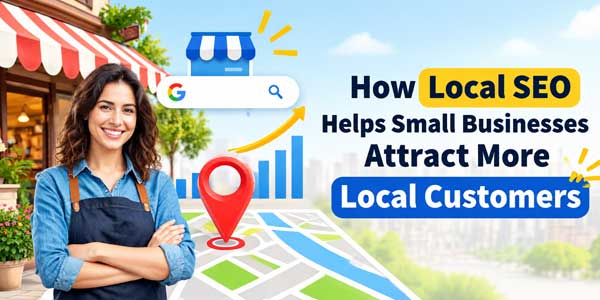
Use Local Digital PR
A small local business may have newsworthy stories that larger national publications would never cover but local media may value.
Possible angles include:
- A new branch opening.
- A local employment initiative.
- A community event.
- An original local survey.
- A charity partnership.
- A local industry report.
Local media coverage can build both awareness and online authority.
Create Content Around Real Local Questions
Local content does not have to consist entirely of sales pages.
A business can publish useful information that answers questions from its local customers.
Examples include:
- Best Time To Service An AC Before Karachi Summer.
- What To Check Before Joining A Gym In Karachi.
- Office CCTV Requirements For Small Businesses.
- How Much Does Website Development Cost In Pakistan?
This content can build organic visibility earlier in the customer’s decision journey.
Use LocalBusiness Structured Data Where Appropriate
Google supports LocalBusiness structured data and relevant subtypes.
Structured data can help search engines better understand business information such as:
- Name.
- Address.
- Telephone.
- Opening hours.
- Business type.
Structured data is not a magic ranking boost.
It is machine-readable information that can help Google interpret the page and may support eligible search features.
Make Sure Structured Data Matches Visible Information
Do not use schema to provide one address while the page displays another.
Keep important information aligned across:
- Website content.
- Structured data.
- Google Business Profile.
- Major business listings.
Conflicting information creates unnecessary ambiguity.
Optimize For Mobile Local Searches
Many local searches happen when users are actively looking for a nearby option.
A mobile visitor should quickly be able to:
- Call.
- Get directions.
- View opening hours.
- Book.
- See services.
- Contact the business.
A slow or confusing mobile website can waste local visibility even when rankings are strong.
Make Calls And Directions Easy
A local business website should reduce friction.
Consider providing:
- Clickable phone numbers.
- Clear address.
- Directions link.
- Contact form.
- Booking button.
- WhatsApp or messaging option where appropriate.
Do not bury the phone number at the bottom of a complicated contact page.
Local SEO should produce actions, not just impressions.
Improve Website Speed And Page Experience
Local customers often visit websites on mobile connections.
Compress large images, reduce unnecessary scripts, optimize caching, and keep pages responsive.
A fast website improves usability and supports broader organic SEO performance.
Remember that Google Business Profile visibility and website quality work together rather than functioning as completely separate systems.
Create Trust Signals On The Website
Customers who discover a local business through Maps frequently check the website before contacting it.
Useful trust signals include:
- Real business photos.
- Clear contact information.
- About page.
- Team information.
- Case studies.
- Professional credentials.
- Customer testimonials.
A strong ranking cannot compensate for a website that appears untrustworthy.
Track Local SEO Conversions Instead Of Rankings Alone
A #1 ranking is not the final business objective.
Track whether local search generates:
- Calls.
- Bookings.
- Direction requests.
- Website conversions.
- Messages.
- Revenue.
This helps determine whether your local SEO strategy is attracting valuable customers rather than only increasing visibility.
Use Google Search Console For Local Website Performance
Search Console can reveal which local queries are driving impressions and clicks to your website.
Look for searches involving:
- City names.
- Neighborhood names.
- Service terms.
- Brand searches.
- Local problem-based queries.
This information can reveal new service-page or content opportunities.
Monitor Google Business Profile Performance
Use available Business Profile performance data to understand how people are interacting with the listing.
Depending on the business and available reporting, useful metrics can include:
- Profile interactions.
- Calls.
- Website clicks.
- Direction-related activity.
Combine profile data with analytics and lead tracking for a more complete picture.
Do Not Obsess Over One Local Rank Position
Local rankings can vary significantly based on the searcher’s physical location.
Your business might rank strongly two kilometers away and differently fifteen kilometers away.
That does not necessarily indicate an SEO problem.
Remember that distance is part of Google’s local ranking framework.
Local SEO For Service-Area Businesses
Businesses that travel to customers need a slightly different strategy from storefront businesses.
Focus on:
- Accurate service areas.
- Strong service pages.
- Real reviews.
- Local case studies.
- Area-specific content where useful.
- Clear contact options.
Do not create fake offices just to appear closer to customers.
Local SEO For Multi-Location Businesses
Businesses operating several genuine physical locations should create clear information for each location.
Each branch can have:
- Its own eligible Business Profile.
- Unique location page.
- Correct phone information.
- Branch-specific hours.
- Relevant photos.
- Location-specific information.
Avoid copying one city page and changing only the address.
Useful branch pages should reflect the actual customer experience at that location.
Local SEO For Restaurants And Cafes
Restaurants should pay particular attention to:
- Accurate hours.
- Category.
- Menu information.
- High-quality photos.
- Reviews.
- Location details.
Customers often make restaurant decisions directly from Maps and Business Profile information before visiting the website.
Local SEO For Clinics And Professional Services
Clinics, accountants, legal practices, and other professional services need especially strong trust signals.
Useful information may include:
- Practitioner profiles.
- Qualifications.
- Services.
- Opening hours.
- Booking process.
- Location.
Never manufacture credentials or customer experiences merely for SEO.
Local SEO For Gyms And Fitness Businesses
Gyms can benefit heavily from local SEO because most members prefer a convenient location.
Important information includes:
- Exact location.
- Operating hours.
- Membership options.
- Facilities.
- Parking.
- Trainer availability.
- Real interior photos.
Content such as workout guidance can build broader organic reach, while location and membership pages capture stronger local intent.
Avoid Fake Google Business Profiles
Creating multiple fake listings, virtual addresses, or nonexistent branches can violate Google Business Profile guidelines.
Google generally requires eligible businesses to have legitimate in-person customer contact under its Business Profile eligibility rules.
Build visibility around real business operations.
Artificial locations may create short-term exposure but long-term account and reputation risk.
Do Not Create Keyword-Stuffed Business Names
A Business Profile name should reflect the real-world name.
Avoid turning it into something such as:
ABC Plumbing Best Plumber Emergency Plumbing Drain Cleaning Karachi 24/7
Use service information in appropriate profile fields and website content instead.
Do Not Buy Reviews
Fake reviews may look like a shortcut to stronger local prominence, but they create significant policy and trust risks.
Google prohibits reviews that are:
- Paid for.
- Incentivized.
- Not based on genuine experiences.
- Posted through manipulated accounts.
A slower stream of authentic reviews is more sustainable.
Do Not Build Hundreds Of Low-Quality Citations
Directory quantity is not the objective.
A listing on a relevant local industry directory can be useful.
Hundreds of automated listings on obscure websites may create administrative clutter and little customer value.
Focus on quality, relevance, and real-world usefulness.
Do Not Create Thin Location Pages
A page targeting a neighborhood should provide more than a replaced place name.
Add location-specific usefulness such as:
- Directions.
- Local service availability.
- Customer examples.
- Neighborhood information.
- Branch photos.
If you cannot provide meaningful local information, reconsider whether a separate page is necessary.
Do Not Expect Schema To Create Rankings By Itself
LocalBusiness structured data can help machines understand business details.
It does not override:
- Distance.
- Business Profile quality.
- Reviews.
- Website relevance.
- Prominence.
Schema should support accurate content, not replace it.
A Practical Local SEO Strategy For Small Businesses
- Claim And Verify Your Google Business Profile.
- Choose The Most Accurate Primary Category.
- Complete All Important Business Information.
- Keep Hours And Contact Details Accurate.
- Add Real High-Quality Photos.
- Build A Clear Local Business Website.
- Create Strong Service Pages.
- Create Genuine Location Pages Where Needed.
- Request Honest Customer Reviews.
- Respond To Reviews Professionally.
- Build Relevant Local Citations.
- Earn Local Links And Media Coverage.
- Publish Useful Local Content.
- Add Accurate LocalBusiness Structured Data.
- Optimize The Mobile Experience.
- Track Calls, Leads, Bookings, And Sales.
Complete Local SEO Checklist
- Eligibility: Is The Business Eligible For A Google Business Profile?
- Verification: Is The Profile Verified?
- Business Name: Does It Match The Real Business Name?
- Primary Category: Is It Accurate And Specific?
- Additional Categories: Are They Truly Relevant?
- Address: Is It Accurate Where Applicable?
- Service Area: Does It Reflect Real Coverage?
- Phone: Is The Contact Number Current?
- Website: Does The Profile Link To The Best Landing Page?
- Hours: Are Normal And Special Hours Current?
- Services: Are Important Services Clearly Listed?
- Photos: Are Real Business Images Available?
- Reviews: Is There A Sustainable Review Request Process?
- Review Replies: Are Customers Receiving Professional Responses?
- Website: Does It Clearly Explain Services And Location?
- Service Pages: Are Major Services Covered Individually?
- Location Pages: Do They Provide Genuine Local Value?
- Local Keywords: Are They Used Naturally?
- Citations: Is Core Business Information Consistent?
- Local Links: Are Relevant Community And Industry Links Being Earned?
- Structured Data: Is LocalBusiness Markup Accurate?
- Mobile UX: Are Calls, Directions, And Bookings Easy?
- Speed: Does The Website Load Quickly?
- Tracking: Are Local Leads And Revenue Measured?
How Long Does Local SEO Take To Work?
There is no universal timeframe.
Results depend on:
- Competition.
- Location.
- Existing reputation.
- Website quality.
- Review profile.
- Business prominence.
- How well the business matches the query.
A newly verified business may begin appearing quickly for branded searches while taking much longer to become competitive for valuable non-branded local queries.
Local SEO should be treated as an ongoing growth system rather than a one-time setup task.
How Local SEO Turns Searches Into Customers
The strongest local SEO strategy improves the complete customer journey.
- A Customer Has A Local Need.
- They Search Google Or Maps.
- Your Business Appears As A Relevant Option.
- Reviews And Photos Build Confidence.
- Accurate Hours And Location Remove Uncertainty.
- The Website Provides Deeper Information.
- The Customer Calls, Visits, Books, Or Purchases.
This is why local SEO can create measurable business value.
It connects search visibility directly with customers who are geographically and commercially relevant.
Final Verdict On Local SEO For Small Businesses
Local SEO is one of the most practical digital marketing strategies available to small businesses because it focuses on customers who are already searching for nearby products and services.
Google’s local search system is primarily built around relevance, distance, and prominence.
You cannot completely control distance.
You can, however, improve relevance and prominence significantly.
Start by creating and verifying an accurate Google Business Profile. Use the real business name, choose the right category, add relevant services, provide accurate hours, keep contact details current, and upload useful real-world photographs.
Then strengthen the website.
Create useful service pages. Explain where the business operates. Build location pages only where they provide real value. Use local terminology naturally instead of stuffing city names or near me phrases into every paragraph.
Build a genuine review acquisition process.
Ask real customers for honest feedback through Google’s review link or QR code. Respond professionally to both positive and negative reviews.
Never buy reviews or offer discounts in exchange for ratings.
Build prominence beyond Google Business Profile.
Earn references from legitimate local organizations, industry directories, business partners, community organizations, and local media. Keep important business details reasonably consistent across reputable sources.
Use LocalBusiness structured data to provide machine-readable business information, but remember that schema is not a substitute for a strong reputation, accurate Business Profile, or relevant website.
Optimize the entire experience for mobile users.
A customer who discovers your business locally should be able to call, get directions, review services, check hours, and make a booking without unnecessary friction.
Finally, measure outcomes rather than obsessing over one local ranking position.
Local rankings vary by geographic position because distance is part of Google’s system. The stronger KPI is whether Search and Maps are producing more calls, bookings, visits, inquiries, and revenue.
The Real Power Of Local SEO Is Not Simply Ranking Higher On A Map. It Is Making Your Business Easier To Discover, Easier To Trust, And Easier To Choose At The Exact Moment A Nearby Customer Needs What You Offer.
Everyday Reader Frequently Asked Questions
What Is Local SEO And Why Is It Important For Small Businesses?
Local SEO is the process of improving a business’s visibility for geographically relevant searches on Google Search and Maps. It helps small businesses reach nearby customers who are actively looking for their products or services and can generate calls, visits, bookings, directions, and leads.
How Does Google Rank Local Businesses?
Google states that local results are primarily based on relevance, distance, and prominence. Relevance measures how closely a business matches the query, distance considers proximity to the searcher or searched location, and prominence reflects how well known and established the business appears.
Do Google Reviews Help Local SEO Rankings?
Google says review quantity and review score can contribute to local ranking and prominence. Genuine positive reviews can also improve customer trust and conversion. Businesses should ask real customers for honest reviews but must not buy or incentivize reviews.
How Can A Small Business Rank Higher On Google Maps?
Verify and fully optimize the Google Business Profile, choose accurate categories, keep business information and hours current, earn genuine reviews, add useful photographs, strengthen the website, create relevant service and location content, and build legitimate local prominence through links, articles, directories, and community visibility.
How Long Does Local SEO Take To Show Results?
There is no fixed timeframe because local results depend on competition, location, business relevance, reputation, reviews, website quality, and existing prominence. Branded visibility may improve quickly, while competitive non-branded local queries can require sustained optimization and reputation building.









Be the first to write a comment.