
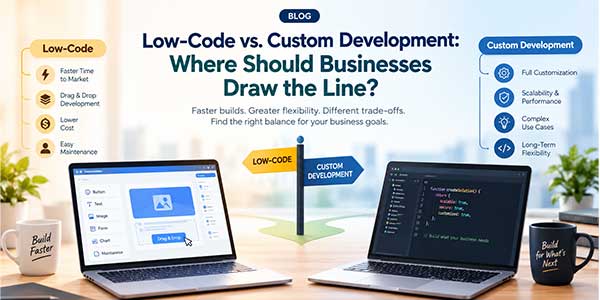
Low-code got you to launch. Will it get you to scale?
Many teams are asking the same question right now. Low-code tools let you build apps fast. For simple internal tools, that speed is a major win. But it has limits.
As your workflow gets more specific, low-code development limitations start to show. You start spending more time fighting the platform than building features. Your roadmap starts depending on the vendor.
This is where most teams start facing the real trade-off. For quick and low-risk projects, low-code is great. A custom build offers you control and custom software flexibility a growing project needs.
Speed got you there. The real question is whether this approach will still work three years from now. Let’s begin with the custom software development benefits that help answer it.
Table of Contents
Benefits of Custom Software Development for Businesses:
Even as low-code tools get better, custom software remains essential for companies that have unique needs. Businesses in complex fields still depend on custom apps. This is because generic tools force teams to bend their processes:
Built Around Business Needs:
Most businesses end up changing their processes to fit the tool. Custom software flips that. You build a system around how your company works.
In fields like logistics and finance, multi-step approvals and special data handling are a must. That is why custom software is helpful in these sectors.
For example, a shipping company can build custom tracking rules for its unique delivery network rather than relying on a basic dashboard.
More Flexibility for Future Growth:
One of the major features of custom software flexibility is the freedom to add or change features as your business grows. Companies keep full control of system connections and data management. Because of this, businesses can add new features. For that, they don’t have to wait for a vendor to release an update. Over time, the same code can grow into new markets. Additionally, it can connect to new tools while staying aligned with company goals.
Low-Code and Custom Development Explained:
To understand low-code vs custom development, we need to understand what each approach does best.
What Is Low-Code Development?
Low-code uses simple visual screens and pre-built parts. Teams can develop and launch simple apps in weeks. These work best for basic apps where fast setup matters.
What Is Custom Development?
For custom software development, skilled software engineers are required. It gives you total control over how the app is built and its features. This complete control is best for core business systems.
Now that we know what low-code and custom development are, let us check out some clear differences between the two:
| Factor | Low-code | Custom Development |
| Development Speed | Faster Initial Delivery | Longer development cycle |
| Customization | Restricted due to platform capabilities | Fully customizable |
| Scalability | Based on platform limitations | Designed around business needs |
| Integration | Ideal for standard integrations | Supports complex integrations |
| Ownership | Dependent on platform | Full control |
As you can see, low-code platforms excel at delivering basic apps in record time. On the other hand, custom development shines when a project demands tailored functionality and complete technical control. It is important to know the difference between them. Pushing low-code tools beyond their intended limits can quickly reveal major operational challenges.

Challenges of Low-Code Development:
Clear low-code development limitations start showing up as soon as apps grow past basic tasks.
Limited Customization Options:
As soon as a business needs advanced tools, it can no longer rely on pre-built blocks. Teams waste their time trying to force the platform to work. Alternatively, they accept compromises that reduce efficiency.
Scalability Issues:
As user numbers grow or data increases, some platforms slow down. Big business apps require precise control over speed. This is something that low-code tools rarely give access to. You cannot see or change the underlying code. That is why reliable software testing and quality assurance practices are much harder.
Platform Dependency:
Companies get stuck with vendors’ price hikes and plan changes. Moving a low-code app to a new platform is expensive and challenging. It locks down teams into choices made years ago.
When Custom Development Makes Sense?
There are clear signs that show when to choose custom software development. Businesses should pick a custom build when:
- Existing software cannot support unique business workflows.
- A lot of internal and external systems require complex and real-time data flow.
- The product itself is the main thing that sets the business apart from competitors.
- The company expects steady growth and constant feature updates.
- AI must be built directly into the main app.
In the cases mentioned above, the higher upfront costs pay off with total control. It also ensures fewer problems as the company grows. With custom web app development, teams can pick the best tech tools for present and future goals. This includes emerging SaaS development trends that emphasize modular, cloud-native architectures.
How to Choose the Right Approach?
A simple guide keeps the choice grounded in real business needs.
Choose Low-Code When:
- The aim is fast testing or quick internal tools.
- Business needs are expected to stay the same.
- The app solves daily simple tasks.
- Launch speed is the main priority.
Choose Custom Development When:
- The software is customer-facing.
- Full control over features and growth is required.
- The software runs core business operations.
- The solution must evolve over the next few years.
Many companies opt for a hybrid mix. This is where low-code is considered for quick internal tools, and custom software is used for core platforms that run their business. This combination allows teams to move quickly where risk is low while protecting the systems that matter most.
Wrapping Up:
Low-code platforms allow you to build apps faster and easier. It helps teams test ideas and deliver value quickly. At the same time, long-term success depends on picking a build strategy. Custom development continues to give the deep control and adaptability needed for major digital projects.
You can make the smart choice by looking at your current limits and future goals. Every good digital strategy weighs these details carefully instead of just picking the newest tool. Businesses who are evaluating their next software initiative should take a closer look at the level of flexibility needed before choosing a development approach.
 About the Author:
Samrat Biswas is a distinguished VP of Operations, Engineering, and Growth in Unified Infotech, renowned for his deep expertise in scaling teams and refining processes. Samrat’s writings are informed by his wealth of experience, offering readers valuable insights into the intricacies of engineering leadership, operational efficiency, and driving transformational change within organizations.













Be the first to write a comment.